7 Reasons RPM EHR Integrations Fail (and How to Fix Them)
Discover why remote patient monitoring rollouts stall, from HL7 FHIR mapping issues to workflow gaps, and learn how to fix RPM EHR integration failures.
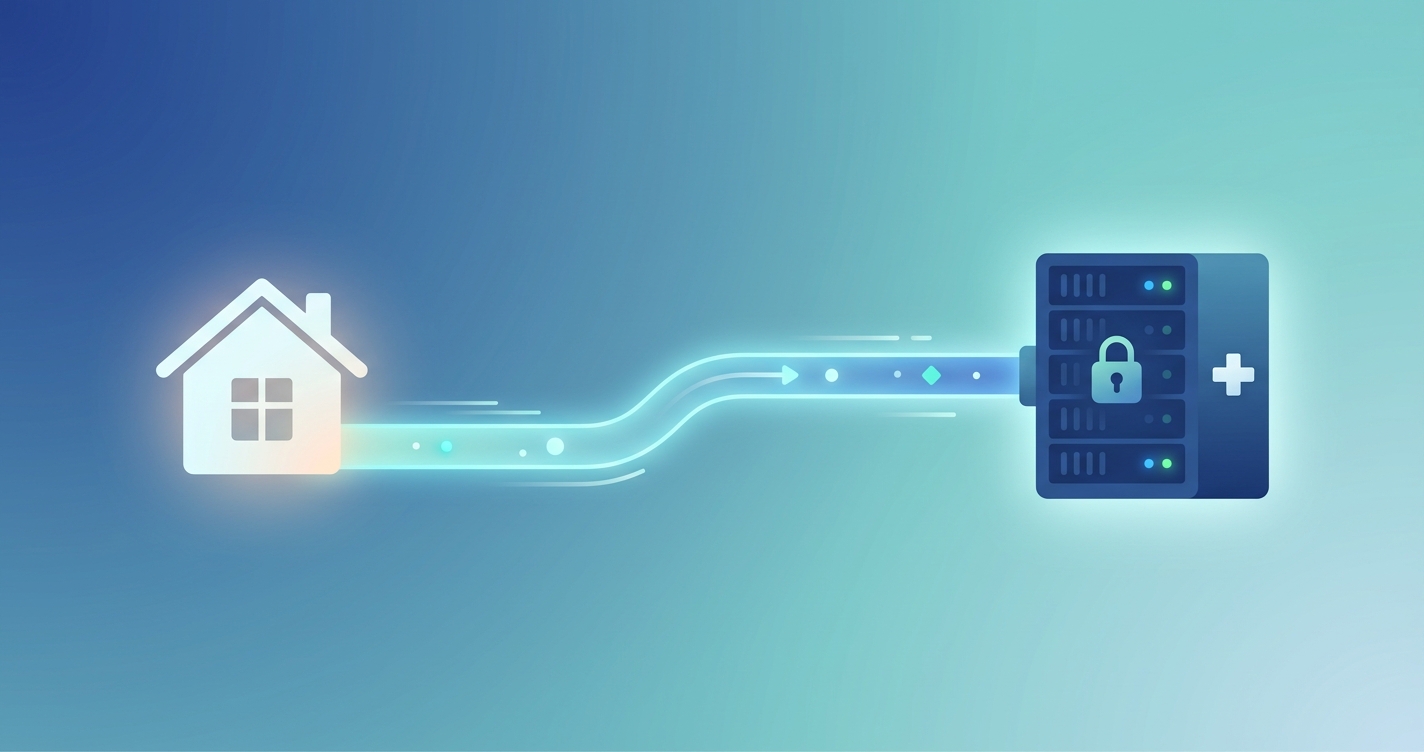
The structural challenge of modern remote care is rarely the hardware deployed to patients. For health IT directors and clinical engineering teams, the fundamental bottleneck occurs at the system architecture level. Establishing a reliable RPM EHR integration requires routing asynchronous physiological data from decentralized home networks into rigidly structured, highly secure clinical databases. When this data highway breaks down, remote monitoring programs stall, clinical adoption plummets, and operational costs multiply. Solving these technical and workflow bottlenecks requires moving beyond simple application programming interface connections to architecting comprehensive, highly resilient data reconciliation pipelines.
"Only 30 percent of hospitals have implemented fully integrated remote monitoring solutions, leaving the majority of clinical teams to navigate siloed data environments and manual entry processes." (Dialog Health Industry Report, 2023)
Analyzing RPM EHR integration vulnerabilities
When an RPM EHR integration fails, the failure usually stems from a misalignment between how physiological data is generated and how a clinical system is built to receive it. Health systems often treat continuous physiological data as a series of discrete, static events, much like a standard laboratory result. However, remote patient monitoring generates a continuous, noisy stream of metrics that traditional electronic health record architectures struggle to contextualize.
Health IT teams must balance network security, data normalization, and user interface design. A successful data synchronization requires Fast Healthcare Interoperability Resources (FHIR) Observation resources to map precisely to specific clinical flowsheets. If the payload arrives in an unrecognizable proprietary format or a poorly structured Javascript Object Notation (JSON) file, the entire automated sequence fails.
The technical gap between legacy HL7 v2 message parsing and modern RESTful API webhooks represents a significant vulnerability. Legacy systems expect batched data in rigid formats, while modern cloud devices transmit discrete data points instantly. Bridging this gap requires sophisticated middleware capable of translating protocols on the fly while maintaining strict compliance with health data privacy regulations.
| Integration Architecture | Data Handling Protocol | Clinical Workflow Impact | Engineering Maintenance Burden |
|---|---|---|---|
| Disconnected Vendor Portal | Isolated cloud database | Requires secondary system login | Low initial setup, high operational drag |
| Flat File HL7 v2 Feed | Batch processing queues | Static data dumps into documents | High mapping complexity for legacy systems |
| Native FHIR API Integration | Real-time structured data | Embedded directly into flowsheets | High initial engineering, low long-term drag |
The operational symptoms of a failing integration typically present in predictable patterns:
- Clinical staff spending excessive hours manually transferring readings from a third-party portal into the primary clinical record.
- Inconsistent mapping of vital signs resulting in empty fields within provider dashboards and missing chart context.
- An overwhelming volume of uncontextualized alerts leading to rapid clinical alert fatigue and staff burnout.
- Missed billing opportunities due to disconnected clinical time-tracking and administrative workflows.
- Technical latency causing delayed clinical responses to acute physiological changes.
Workflow and architecture failures (industry applications)
1. proprietary payload formats and inconsistent standards
Many monitoring devices transmit data in proprietary protocols designed for consumer applications rather than clinical environments. When these payloads reach the integration engine, they lack the standardized coding required by FHIR Observation resources. Without standard nomenclature, the receiving system rejects the data or files it as an unstructured document. The Fix: Implement a middleware integration engine that translates proprietary device webhooks into standardized FHIR resources before the data ever reaches the clinical boundary. Use standardized Logical Observation Identifiers Names and Codes (LOINC) for all incoming physiological metrics to ensure seamless ingestion.
2. unfiltered data pipelines causing alert fatigue
Routing raw, high-frequency vital signs directly into a clinical inbox is a structural error. Unfiltered data creates noise. If a system triggers an alert for every minor fluctuation in a patient's heart rate, clinical staff will inevitably begin to ignore all notifications, including critical ones. The Fix: Configure alert fatigue filters and clinical decision support rules at the middleware layer. Only route threshold-breaching events, aggregated daily averages, or sustained physiological anomalies into the core clinical inbox.
3. mismapped FHIR observation resources
Even when utilizing modern standards, health IT teams frequently misconfigure the exact resource mapping. If a systolic blood pressure reading is sent to a generic notes field rather than the specific vital signs flowsheet, the data becomes invisible to automated clinical decision support tools and population health analytics engines. The Fix: Work directly with clinical analysts to map specific data elements to the corresponding flowsheet rows in the primary clinical database. When configuring FHIR payloads, health IT teams must ensure that each discrete metric is tagged with the correct LOINC code. Standardizing these inputs ensures that a reading taken in a patient's living room is treated with the same clinical rigor as a reading taken in the intensive care unit.
4. disconnected billing and administrative workflows
Reimbursement for remote care requires careful documentation of transmission days and clinical review time. When clinical monitoring and billing ledgers exist in separate, non-integrated environments, revenue leakage is mathematically guaranteed. Providers may do the clinical work but fail to log the time in the correct module. The Fix: Automate time-tracking triggers within the native workflow. Billing for standard monitoring codes requires exact timestamps and audit trails. Use standard API calls to update billing modules automatically when a provider completes a review of the remote data or resolves an automated alert. If the clinical monitoring environment does not automatically pass time-tracking data back to the central billing engine, revenue cycle teams must manually audit provider activity logs, which costs more in administrative labor than the reimbursement itself.
5. legacy system compatibility bottlenecks
Older systems relying entirely on HL7 v2 cannot easily process asynchronous RESTful API calls. Attempting to force modern data streams into legacy batch-processing architectures results in severe data latency and frequent connection timeouts. The Fix: Utilize an integration engine that can receive modern API webhooks, temporarily store the data, and compile it into scheduled, well-formed HL7 v2 messages that the legacy system can reliably consume without crashing.
6. poorly defined staff roles and operating procedures
Technology cannot solve operational ambiguity. If clinical teams do not have a standard operating procedure for reviewing ingested data, the technical integration provides zero clinical value. A perfect data pipeline is useless if no one checks the receiving dashboard. The Fix: Design the technical integration alongside a strict clinical workflow. Define exactly which care team member is responsible for checking specific flowsheets at specific times, and build automated escalation protocols for unread critical alerts.
7. patient-side network synchronization failures
The integration pipeline often fails before the data even leaves the patient's home. Complicated Bluetooth pairing processes, mandatory smartphone applications, and unstable home network connections result in dropped payloads and fragmented data histories. The Fix: Deploy cellular-enabled devices that bypass patient-managed networks entirely. Cellular hubs ensure a direct, pre-configured connection to the clinical cloud, removing the technical burden from the patient and stabilizing the first mile of data transmission.
Current research and evidence
The barriers to successful data routing are well documented in clinical informatics literature. A 2023 study by researchers P. Luscher, L. M. Scherer, and A. M. Mehrotra published in the Journal of General Internal Medicine evaluated the operational realities of remote monitoring in primary care. The research identified that handling the massive data influx and establishing manageable clinical workflows were primary barriers to program sustainability. The authors noted that without seamless data routing directly into existing interfaces, physicians viewed the programs as unprofitable and administratively burdensome.
Further analysis in health informatics indicates that variations in how different vendors implement standards cause significant interoperability friction. Research emphasizes that even among systems claiming strict compliance with interoperability mandates, the lack of uniform data structures necessitates highly complex mapping processes. Academic reviews consistently highlight that standardizing data input from decentralized devices is the only reliable method for enabling accurate clinical decision support. Without standardizing the data before ingestion, health systems assume massive legal and clinical risks related to missed diagnoses.
The Future of RPM EHR Integration
The next phase of clinical data architecture will move away from one-way batch processing and toward continuous, bidirectional synchronization. Future integrations will not simply push data into a clinical record; they will pull clinical context back to the edge computing devices. This bidirectional flow will allow monitoring platforms to adjust alert thresholds dynamically based on a patient's recent laboratory results or medication changes documented in the primary record.
Health systems will increasingly demand plug-and-play interoperability as a baseline requirement for any vendor procurement. The reliance on expensive custom middleware will slowly diminish as standardized data models become universally adopted across the industry. Application programming interfaces will mature to support more complex queries, allowing care teams to filter remote data contextually based on the patient's specific chronic condition rather than relying on generic, system-wide rules.
Frequently asked questions
What is the most common cause of an integration failure? The most common cause is inconsistent data mapping, where external monitoring platforms fail to format physiological data into the specific standardized resources required by the receiving clinical system. This mismatch forces the receiving system to reject the incoming transmission entirely.
How does FHIR improve remote monitoring workflows? FHIR provides a standardized, modern web-based framework for exchanging healthcare data. It allows discrete data points, such as a single daily weight measurement, to be queried and written instantly via RESTful APIs rather than waiting for large batch files to process at the end of the day.
Why is alert fatigue a major integration risk? If a technical integration pushes every single raw data point into a clinical inbox without filtering, providers are overwhelmed by non-critical notifications. This noise degrades the utility of the system, increases clinical frustration, and leads to missed acute events that require immediate intervention.
Can legacy systems support modern continuous data feeds? Legacy systems can support continuous data, but they typically require a robust middleware engine to receive modern webhooks and translate them into the older HL7 v2 message formats that the legacy architecture was originally built to process.
Solving these technical bottlenecks requires an infrastructure built specifically for healthcare data standards. Circadify is actively addressing this space by providing tools that connect modern physiological metrics to legacy systems without disrupting established clinical routines. Health IT directors and engineering teams evaluating their data architecture can explore our guided integration assessment by reviewing the official documentation at circadify.com/solutions/telehealth.