Can a 70-year-old check vitals at home without learning a new gadget?
For health IT, the challenge of senior remote patient monitoring isn't just data, but adoption. Camera-based, no-device solutions are changing the workflow.
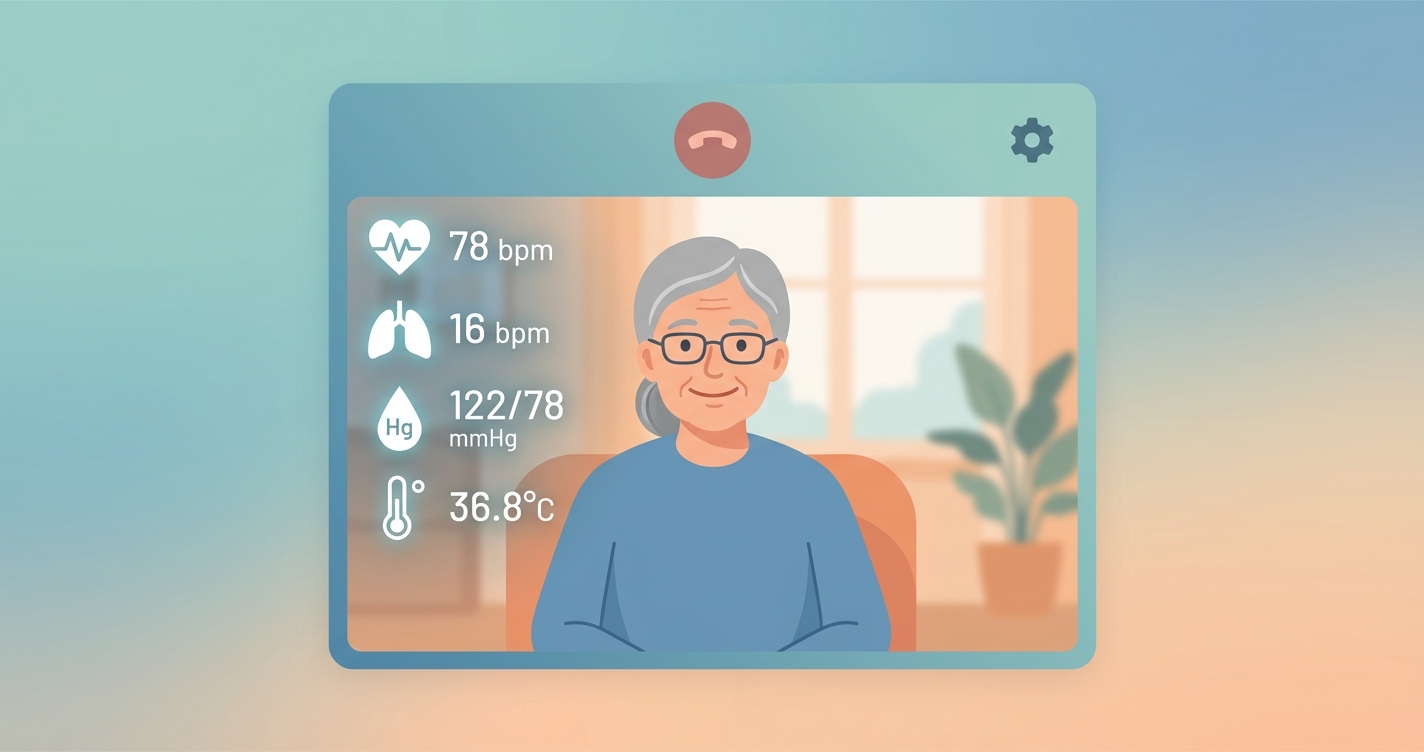
The question of how to effectively monitor an aging parent at home is no longer a niche concern for adult children; it's a mainstream logistical and emotional challenge. The process often starts with a desire for peace of mind but quickly runs into a significant barrier: the complexity of the technology itself. For a 70-year-old who has never used a smartphone or tablet, being handed a Bluetooth-enabled blood pressure cuff, a pulse oximeter, and a gateway hub can be overwhelming. The fear that they won't use it correctly, or at all, is a primary driver of low adoption for many remote patient monitoring (RPM) programs. This presents a critical workflow problem for health systems: if the patient can't or won't use the device, the entire data pipeline, no matter how well-integrated, is rendered useless.
"A 2021 report from Pew Research Center found that while 75% of seniors use the internet, a significant portion still face challenges, with one study noting that 77% of older adults required assistance to learn how to use a new digital device."
The Challenge of Traditional RPM for Seniors
The traditional model of remote patient monitoring was built on a foundation of dedicated hardware. Patients are issued a kit of devices, taught how to use them, and expected to take readings on a regular schedule. While effective for some, this approach presents considerable usability hurdles for elderly users who may be managing multiple chronic conditions, cognitive decline, or simply a lack of familiarity with digital technology. The process of pairing devices, charging batteries, and navigating user interfaces can become a significant point of friction. For health IT and telehealth operations teams, this friction translates directly into failed readings, data gaps, and ultimately, a lower return on investment for the RPM program. The promise of proactive, data-driven care is broken at the first step: data acquisition. This is where the search for an easy home vitals solution for seniors with no device requirement becomes a strategic imperative.
Device-Based vs. Device-Free RPM: A Workflow Comparison
The operational difference between requiring a patient to use a dedicated medical device and enabling passive, contactless data capture is substantial. For health IT directors and EHR integration teams, the focus shifts from managing device logistics and patient technical support to managing a clean, consistent stream of physiological data.
| Feature | Traditional Device-Based RPM | Contactless Camera-Based RPM |
|---|---|---|
| Patient Requirement | Must learn and use multiple hardware devices. | Sits in front of an existing device's camera (tablet, laptop, smartphone). |
| Adoption Barrier | High; requires technical literacy and manual effort. | Low; uses familiar tools and requires no new hardware skills. |
| Data Acquisition | Manual, patient-initiated readings. | Automated, passive measurement during a telehealth call or scheduled scan. |
| Workflow Impact | High burden on patient support and device logistics teams. | Reduces patient friction, increases data consistency and compliance. |
| EHR Integration Focus | Reconciling data from multiple, disparate device vendors. | Integrating a single, standardized data stream via FHIR API. |
Industry applications of contactless vitals
The shift towards easy home vitals for seniors with no device is not just about patient convenience; it's about creating more robust and scalable healthcare workflows.
Telehealth Integration
Integrating contactless vitals capture directly into a telehealth platform transforms the nature of a virtual visit. What was previously a subjective conversation becomes a data-enriched clinical encounter.
- A patient can join a video call, and with their consent, the provider can initiate a vital signs scan using the patient's own device camera.
- The data, including heart rate, respiratory rate, and blood pressure, is captured in near real-time and displayed within the provider's dashboard.
- This allows for objective assessment during the virtual visit, enabling more confident clinical decision-making without requiring the patient to own or operate a separate medical device.
Care management workflows
For chronic care management, the goal is consistent, longitudinal data. Contactless scanning provides a method to achieve this with minimal patient burden.
- Health systems can deploy a simple application on a tablet in the patient's home.
- The application can be configured to prompt the senior to complete a scan at a scheduled time, requiring only a single tap.
- The resulting data, structured as HL7 FHIR Observation resources, is sent directly to the EHR, triggering alerts and populating flowsheets without manual intervention.
Current research and evidence
The move toward contactless monitoring is supported by a growing body of research. A systematic review published in the Journal of Medical Internet Research (Xiong et al., 2020) confirmed the viability of using camera-based systems to measure heart rate, respiratory rate, and other physiological signals, a technique known as remote photoplethysmography (rPPG). Studies on usability, such as the work by Konopka et al. (2022) on older adults' perceptions of remote monitoring, have found that acceptance is high when the technology is unobtrusive and clearly demonstrates a benefit for managing their health. The key is to reduce the "technology tax" on the user. The FDA has also recognized this trend, granting clearance to systems that can monitor vital signs using only a camera, signaling a move towards regulatory acceptance of these novel data acquisition methods.
The future of easy home vitals for seniors with no device
The future of RPM is one where data acquisition is ambient and patient-centric. The concept of easy home vitals for seniors with no device will become the standard for programs prioritizing patient adoption and scalability. As computer vision algorithms improve and the integration standards like HL7 FHIR become ubiquitous, the barriers to entry for both patients and health systems will continue to fall. The focus for Health IT teams will shift from managing devices to managing data flows, ensuring that the wealth of information from these new, frictionless sources is securely and efficiently integrated into clinical decision support systems, population health dashboards, and automated billing workflows.
Frequently asked questions
Q: How accurate is a vital sign measurement from a camera? A: Camera-based vital sign monitoring, or remote photoplethysmography (rPPG), has been validated in numerous studies to be accurate for heart rate, respiratory rate, and oxygen saturation. Accuracy for blood pressure is an area of active research, with many solutions showing promising results that correlate strongly with traditional cuff-based measurements. The technology has matured to the point where several vendors have received regulatory clearance for their measurement capabilities.
Q: What are the technical requirements for the patient? A: The primary requirement is a device with a standard digital camera, such as a smartphone, tablet, or laptop, and a stable internet connection. No other special hardware is needed. This low barrier to entry is the core value, as it uses technology that many seniors or their families already possess.
Q: How is the data secured and integrated into the EHR? A: Security is critical. The video stream is analyzed on-device or on a secure server, and the video frames are discarded immediately after the measurement is extracted. The resulting numerical vital signs data is then encrypted and transmitted to the healthcare provider's system, typically using modern interoperability standards like the HL7 FHIR protocol. This ensures the data is formatted as a standard Observation resource, allowing for seamless integration into the patient's EHR chart.
The logistical and technical challenges of caring for an aging population require a fundamental rethinking of the patient experience. By removing the need for new gadgets and complex instructions, camera-based monitoring allows health systems to meet seniors where they are. At Circadify, we are focused on solving the integration side of this challenge, ensuring that this new, valuable stream of patient data flows seamlessly and securely into your existing clinical workflows. To learn more about how to connect contactless RPM to your telehealth platform or EHR, visit our integration guides at circadify.com/solutions/telehealth.