CMS RPM Reimbursement Technology Rules for 2026
How 2026 CMS RPM reimbursement technology and data-capture rules affect finance and IT teams, including new CPT codes 99445 and 99470 and billing requirements.
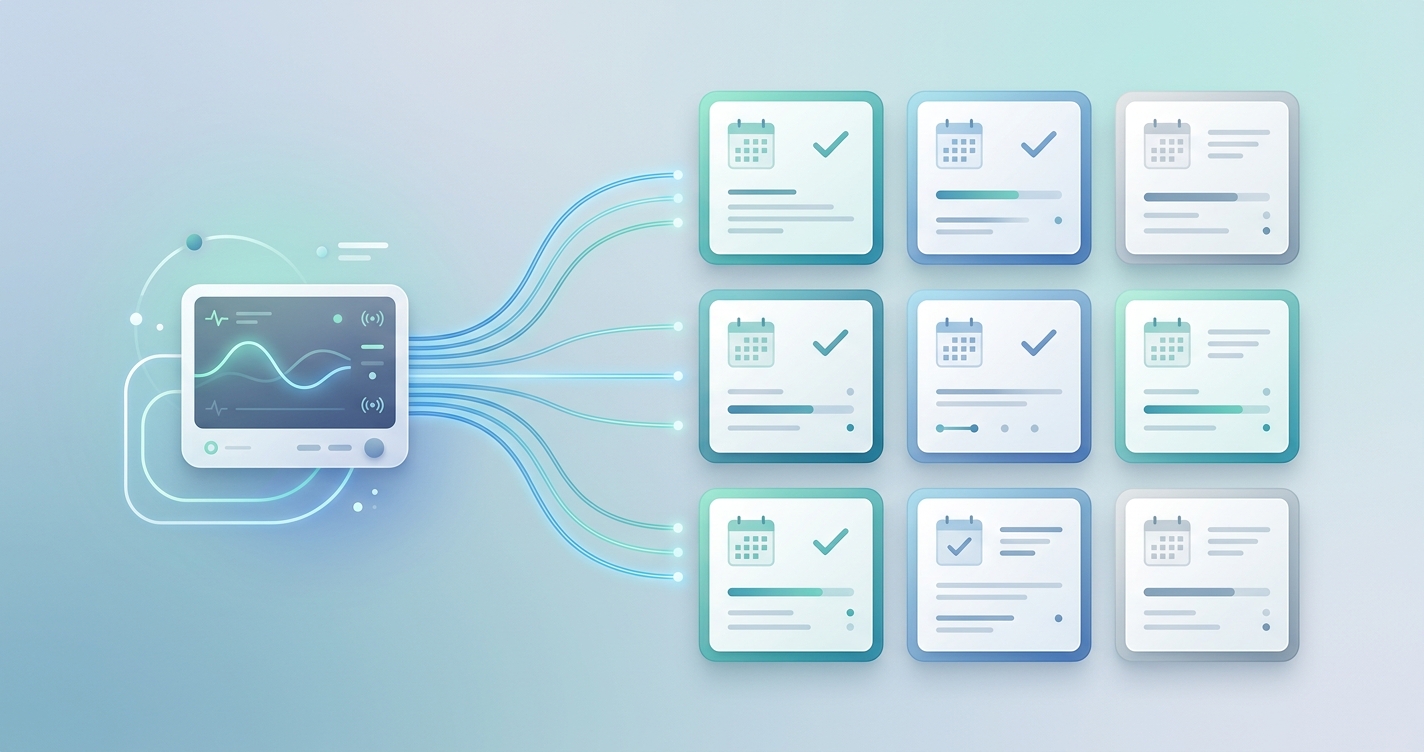
The most consequential change to remote patient monitoring in 2026 is not clinical, it is structural. For the first time since the program matured, the rigid 16-day data transmission threshold that defined CMS RPM reimbursement technology requirements has been split into tiered codes, and the time-based management codes have been shortened. For finance and IT teams, this means the device, the data pipeline, and the audit trail that supports a claim now carry more weight than ever. A reimbursement-ready RPM technology stack in 2026 is one that can prove, automatically and per-patient, exactly how many days of physiologic data were captured and how many minutes of qualifying management time were logged.
CMS finalized two new RPM codes for 2026: CPT 99445 covers device supply for 2 to 15 days of data transmission in a 30-day period, and CPT 99470 covers the first 10 minutes of remote monitoring management, both reflecting changes approved by the American Medical Association CPT Editorial Panel in September 2024.
The shift sounds administrative, but it changes the engineering requirements behind every billable encounter. Where systems previously only needed to confirm a binary "16 days or more" condition, they now need to count days into discrete buckets and tie each transmission to a verifiable timestamp. Underbilling and overbilling both become real exposure when a single program covers thousands of patients with different capture patterns.
What the 2026 CMS RPM reimbursement technology rules actually require
The 2026 Physician Fee Schedule did not invent a new compliance philosophy. It refined an existing one. The principle that physiologic data must be collected by a medical device that automatically transmits readings, rather than being self-reported by the patient, still governs CMS remote monitoring codes. What changed is the granularity of what your technology must measure and store.
Under the revised structure, the device-supply codes split by capture duration. CPT 99453 remains the one-time setup and patient education charge. CPT 99454 now applies specifically to 16 to 30 days of data transmission within a 30-day window, while the new CPT 99445 captures the shorter 2 to 15 day band. On the management side, CPT 99457 still covers the first 20 minutes of monthly treatment management and 99458 covers each additional 20 minutes, but the new CPT 99470 introduces a shorter 10-minute increment that lowers the threshold for a billable interaction.
For data capture rules, three technical obligations carry the most risk:
- Automatic transmission. Readings must originate from a connected device and flow into the record without manual patient entry. Keyboard-typed values do not satisfy the requirement.
- Per-day distinct measurements. The system must be able to attribute readings to specific calendar days so it can place a patient in the correct duration tier.
- Time accounting. Management codes are time-based, so the platform must log non-face-to-face minutes against the rendering clinician with a defensible audit trail.
How the new code tiers map to data capture
| CPT Code | What it covers | 2026 data-capture trigger | Approx. national rate |
|---|---|---|---|
| 99453 | Initial device setup and patient education | One-time, at enrollment | ~$22 |
| 99445 | Device supply, short monitoring | 2 to 15 days of transmission in 30 days | ~$47 to $52 |
| 99454 | Device supply, standard monitoring | 16 to 30 days of transmission in 30 days | ~$47 to $52 |
| 99457 | First 20 minutes of management | 20 minutes non-face-to-face per month | ~$52 |
| 99458 | Each additional 20 minutes | Each added 20-minute block | ~$41 |
| 99470 | First 10 minutes of management | 10 to 20 minutes non-face-to-face per month | ~$26 |
Rates are approximate national averages and vary by geographic adjustment. The operational point for IT teams is that each row in this table corresponds to a different data condition your system must detect and document.
Industry applications for finance and IT teams
The codes are uniform, but the technology decisions that support them differ by team. Reimbursement-ready RPM technology is less about any single device and more about the integrity of the data path from sensor to claim.
Finance and revenue cycle
Revenue cycle teams now need reporting that segments enrolled patients by capture tier in real time, not at month end. A patient sitting at 14 days of transmission on day 28 is a candidate for either the 99445 short-duration code or a nudge to reach the 16-day threshold for 99454. Without a dashboard that surfaces that distinction before the billing window closes, programs leave revenue on the table or risk filing the wrong code. The shorter 99470 management increment also means previously unbillable brief interactions can now be captured, but only if the time-tracking system records them.
Health IT and EHR integration
For integration teams, the durability of the audit trail is the deliverable. CMS RPM reimbursement technology rules assume the data is device-originated and time-stamped, so the integration must preserve provenance as readings move through middleware into the EHR. Mapping device readings to standardized records, such as HL7 FHIR Observation resources, keeps each measurement carrying its own metadata: device identifier, capture timestamp, and patient reference. That metadata is what survives an audit. A pipeline that flattens readings into free-text flowsheet rows loses the very fields a payer may request.
Telehealth operations
Operations leads sit between the two. They own the workflow that ensures patients actually transmit data and that clinical staff log management time correctly. The 2026 changes reward programs that can support flexible monitoring plans, including shorter durations for patients who do not need 30-day continuous capture. That flexibility only translates to revenue if the operational tooling tracks each patient against the right code automatically.
Current research and evidence
Legal and policy analysts have been tracking the 2026 changes since the proposed rule. The firm McDonald Hopkins, in its 2025 analysis of the proposed Physician Fee Schedule, noted that CMS moved to lower the time thresholds for remote patient monitoring, describing the introduction of shorter-duration codes as a response to long-standing provider feedback that the 16-day floor excluded patients who needed only brief monitoring episodes. The underlying code set originates with the American Medical Association CPT Editorial Panel, which approved the new and revised codes in September 2024 before CMS adopted them for the 2026 fee schedule.
Independent reviews from remote care vendors and advisory groups through 2025, including analyses published by ThoroughCare and Rimidi, consistently reach the same operational conclusion: the tiered structure increases billing flexibility but raises documentation precision requirements. The recurring theme across this body of commentary is that the device and data infrastructure, rather than clinical staffing, is now the gating factor for clean claims. Programs that cannot evidence automatic transmission and per-day capture face the same denial risk under the new codes that existed under the old single threshold, only with more variables to get wrong.
It is worth noting that broader telehealth flexibilities, including waivers affecting where and how some remote services are delivered, have continued to be a moving target in legislation, so finance teams should treat statutory telehealth provisions separately from the RPM code structure, which sits in the fee schedule itself.
The future of CMS RPM reimbursement technology
The direction of travel is toward finer measurement. Once CMS established that monitoring duration could be tiered, it set a precedent that future rulemaking may extend to other physiologic categories or to condition-specific monitoring. For technology planners, the safe assumption is that the data capture rules will keep getting more granular, not less. Systems built to count only a single threshold will need rework each cycle, while systems that store rich per-reading metadata can adapt to new tiers with configuration rather than re-engineering.
Two capabilities will separate reimbursement-ready RPM technology from the rest over the next several years. The first is automated code assignment that derives the correct CPT code from observed data conditions rather than relying on manual coder judgment. The second is exportable, audit-grade provenance, so that when a payer requests substantiation, the program can produce device-level evidence in minutes. Both depend on standards-based integration that keeps remote monitoring data structured from the moment of capture.
Frequently asked questions
What is the biggest 2026 change to RPM data capture rules?
The single 16-day transmission threshold was split. CPT 99454 now covers 16 to 30 days of data transmission in a 30-day period, while the new CPT 99445 covers shorter monitoring of 2 to 15 days. Systems must now bucket each patient by capture duration rather than checking a single threshold.
Does patient-entered data count toward RPM reimbursement in 2026?
No. CMS remote monitoring codes continue to require that physiologic data be collected by a medical device that automatically transmits readings. Manually typed or self-reported values do not satisfy the data capture requirement, which makes connected device integration a billing prerequisite.
What new management code did CMS add for 2026?
CPT 99470 covers the first 10 minutes of remote monitoring treatment management, a shorter increment than the existing 99457 which requires 20 minutes. This lets programs bill for briefer qualifying interactions, provided the platform logs the non-face-to-face time against the clinician.
Why does FHIR integration matter for RPM reimbursement?
Standardized records such as FHIR Observation resources preserve each reading's device identifier, timestamp, and patient reference. That metadata is the evidence a payer may request during an audit, so keeping data structured from capture protects clean claims under the tiered 2026 rules.
Circadify is building toward this requirement directly, with RPM data delivered through HL7 FHIR compatible integration so each reading retains the provenance that 2026 billing depends on. Telehealth operations leads evaluating a reimbursement-ready stack can review the integration documentation and EHR guides at circadify.com/solutions/telehealth.