How Telehealth Platforms Embed Camera Vitals Without Custom Development
Discover how telehealth platforms are embedding camera-based vitals monitoring using SDKs and APIs, bypassing the need for custom development and complex hardware.
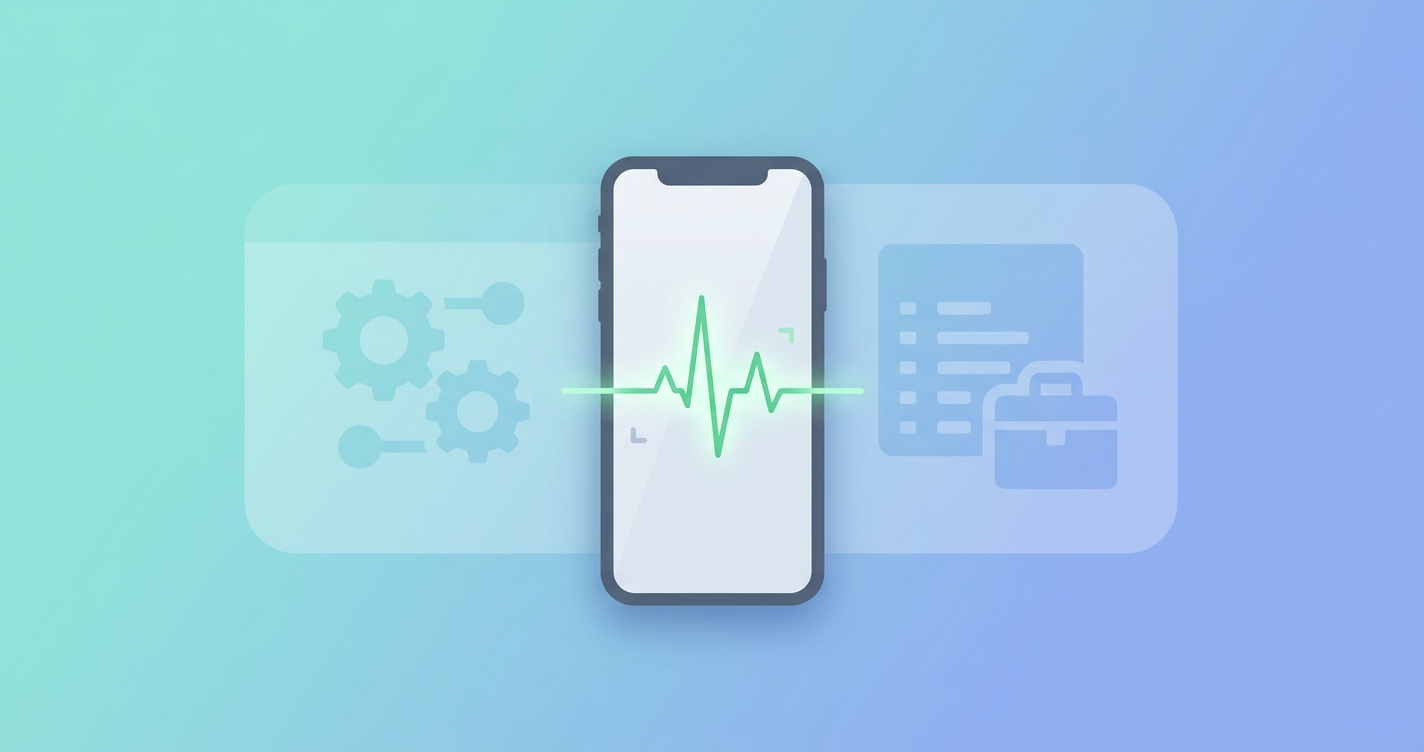
The integration of objective physiological data into virtual care is no longer a forward-looking concept but a present-day operational requirement. As telehealth platforms become a standard modality for care delivery, health IT directors and operations teams face the challenge of capturing vital signs remotely without burdening patients or providers with cumbersome hardware. The solution has emerged in the form of camera-based vital signs monitoring, a technology that uses the ubiquitous cameras on smartphones, tablets, and laptops. This approach bypasses the logistics of peripheral device management and allows for the seamless embedding of data capture into existing clinical workflows.
"The use of remote photoplethysmography (rPPG) has shown strong agreement with ECG for heart rate, often achieving mean absolute errors of 1-2 beats per minute (BPM) under controlled conditions, demonstrating its viability for clinical use in telehealth." - Alboliras, et al., National Institutes of Health (2023)
The Rise of SDKs and APIs in Remote Monitoring
The primary mechanism enabling the telehealth platform embed camera vitals integration is the use of third-party Software Development Kits (SDKs) and Application Programming Interfaces (APIs). Instead of undertaking a resource-intensive, multi-year custom development project to build and validate this technology in-house, telehealth providers and health systems can integrate pre-built, validated modules directly into their existing applications. This strategy dramatically reduces the time-to-market and the total cost of ownership.
An SDK provides a comprehensive set of tools, libraries, and code samples that developers can use to implement a specific feature, in this case, camera-based vitals capture. An API, on the other hand, provides a more narrowly defined interface for requesting specific services or data, such as initiating a scan and receiving the results. For health IT teams, this means they can add robust, science-backed vital signs measurement to their platform with a few weeks of development work, not years. This turnkey approach allows organizations to focus on their core competency: delivering care, not developing novel sensor technology.
| Integration Method | Implementation Time | Required Expertise | Customization Level | Use Case |
|---|---|---|---|---|
| Native SDK (iOS/Android) | 2-4 Weeks | Mobile App Development (Swift/Kotlin) | High | Integrating deeply into a custom mobile telehealth application. |
| Web SDK (JavaScript) | 1-3 Weeks | Web Development (JavaScript, HTML) | High | Embedding vitals capture into a browser-based telehealth portal. |
| Direct API Integration | 3-6 Weeks | Backend Development, API protocols | Medium | Building a custom user interface that communicates with a vitals engine. |
| White-Label App | < 1 Week | None (Configuration only) | Low | Launching a standalone vital signs app under the organization's brand. |
These integration pathways offer flexibility for different technology stacks and strategic priorities. A health system with a mature, custom-built telehealth app may opt for a native SDK to create a seamless user experience. A newer telehealth provider might use a Web SDK to quickly enhance their web-based virtual visit platform.
Key benefits of using an SDK or API approach include:
- Access to validated, current algorithms without R&D investment.
- HIPAA-compliant data handling and transmission.
- Faster deployment and scalability.
- Ongoing updates and improvements from the technology vendor.
- Focus internal resources on workflow integration and clinical adoption.
Industry Applications
The ability to embed camera vitals is creating new possibilities across various telehealth services. The primary value is the addition of objective data points to virtual encounters, which historically relied on subjective patient reporting.
Virtual urgent and primary care
During a virtual visit for an acute complaint, a provider can initiate a camera-based scan to capture the patient's heart rate, respiratory rate, and blood pressure variability. This provides a baseline physiological status that was previously unavailable, helping to inform clinical decisions about the level of acuity and appropriate next steps.
Chronic disease management
For patients with conditions like hypertension or heart failure, regular monitoring is key. A telehealth platform embed camera vitals integration allows providers to embed periodic, frictionless check-ins into their RPM programs. Patients can perform a scan from home using their own smartphone, with the data flowing directly into the EHR or care management platform via FHIR-based integrations.
Pre- and post-operative monitoring
Surgeons and care teams can monitor a patient's recovery remotely. A quick video scan can help assess for signs of distress, such as an elevated heart rate or respiratory rate, potentially indicating a complication like an infection or pain that requires intervention.
Current research and evidence
The underlying technology for most camera-based vitals is remote photoplethysmography (rPPG). A growing body of research validates its accuracy against traditional medical devices. A 2023 study published by the National Institutes of Health (NIH) focused on advancing rPPG for use in naturalistic settings via webcam, finding that deep learning models could significantly improve accuracy by mitigating challenges like motion artifacts and poor lighting.
Researchers from the University of South Australia and the University of Toronto have also published extensively on this topic. A 2022 paper by Hassan, et al., evaluated the use of deep learning models to improve the robustness of rPPG, concluding that such models are essential for clinical-grade measurements outside of a controlled lab setting. These studies consistently highlight that while factors like skin tone, lighting conditions, and patient movement can affect accuracy, advanced signal processing and AI algorithms can effectively compensate for these variables. A scoping review published in 2023 confirmed that for heart rate, rPPG achieves a high degree of accuracy compared to ECG and pulse oximeters, making it a reliable tool for telehealth.
The future of embedded camera vitals
The trajectory for this technology is pointed toward greater accuracy, a wider range of measurements, and deeper workflow automation. Future iterations, currently in research phases, are expected to include measurements like blood oxygen saturation (SpO2), core body temperature, and even cuffless blood pressure measurement that goes beyond simple variability. As these capabilities are validated and incorporated into SDKs, telehealth platforms will be able to capture a comprehensive set of vitals with nothing more than a patient's existing device.
For Health IT directors, this means planning for a future where remote data capture is not an exception but the norm. The architecture of telehealth and RPM platforms must be designed for the continuous, high-volume ingestion of this data. This includes robust support for interoperability standards like HL7 FHIR to ensure that data captured via camera can be seamlessly integrated into the EHR's Observation resources, making it a usable and actionable part of the patient's longitudinal record.
Frequently asked questions
Q: How does camera-based vital signs monitoring work? A: The technology uses a technique called remote photoplethysmography (rPPG). The camera detects subtle, imperceptible changes in the color of a person's skin, which correspond to the blood flow pulsated by the heart. Advanced algorithms analyze this video feed to calculate vital signs like heart rate and respiratory rate.
Q: Is this technology secure and HIPAA compliant? A: Yes. Leading SDK and API providers for camera vitals operate under strict security protocols. The video stream is analyzed in real-time, and often no video is recorded or stored. The resulting vital signs data is encrypted and transmitted through secure channels, ensuring compliance with HIPAA regulations.
Q: What devices are required for the patient? A: No special devices are required. The technology works with the standard cameras already present in smartphones (iOS and Android), tablets, and computer webcams. This hardware-agnostic approach is a key advantage, as it removes the need to procure, ship, and manage dedicated medical hardware.
Q: How does this integrate with an EHR like Epic or Cerner? A: The data from an embedded camera vitals solution is typically transmitted to the telehealth platform's backend. From there, it can be integrated into an EHR using standard interoperability protocols. The most common method is to map the vital signs data to HL7 FHIR Observation resources, which can then be sent to the EHR via its FHIR APIs, populating the patient's chart and clinical flowsheets.
As telehealth solidifies its role in care delivery, the ability to capture objective data without adding friction is critical. The integration of camera-based vitals through established SDKs and APIs presents a scalable and efficient pathway to enhance virtual care. Circadify is actively providing solutions in this space, offering developer-friendly tools to embed this capability directly into existing workflows. To learn more about the technical implementation, visit our integration guides at circadify.com/solutions/telehealth.