
How to Ensure Data Quality in RPM Programs
A research-style report for Health IT on the frameworks and technologies required to ensure data quality in RPM programs, including data validation, governance, and EHR integration.
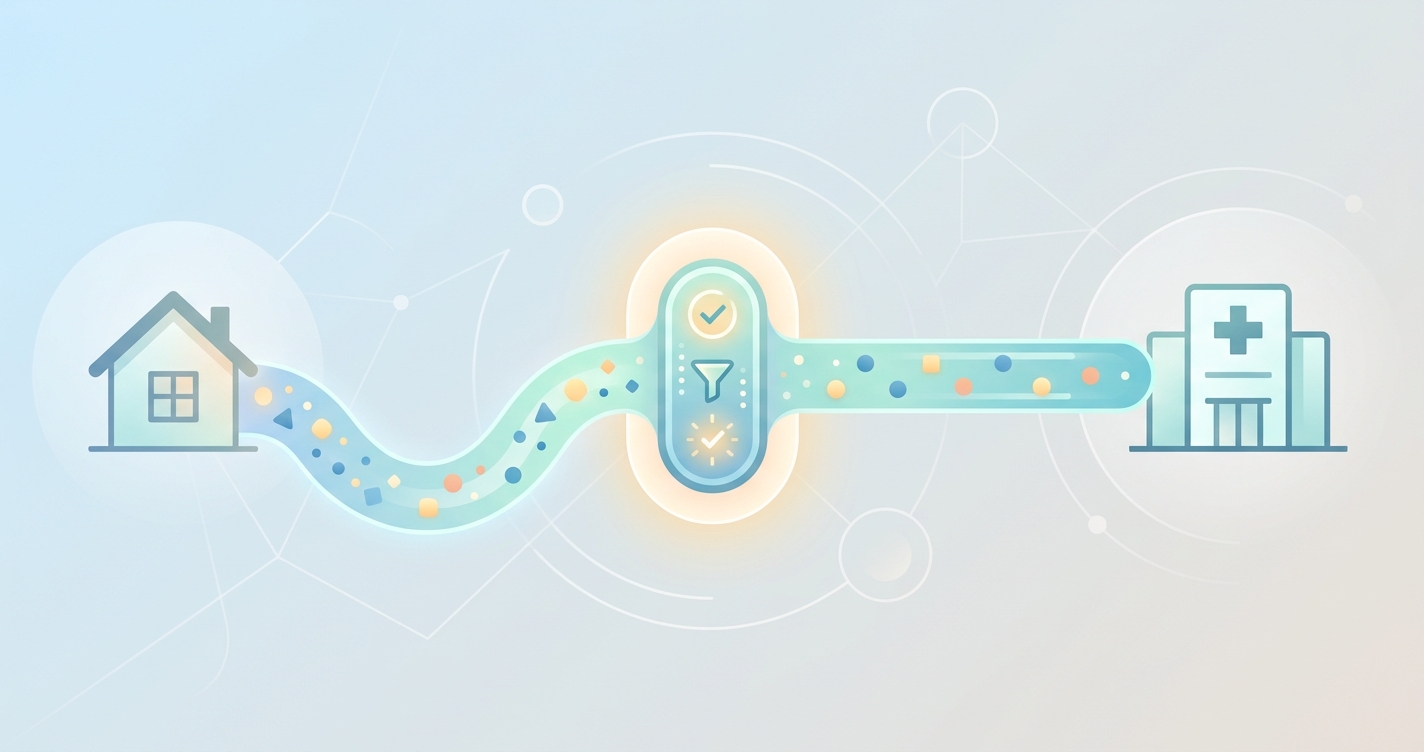
The reliability of a remote patient monitoring (RPM) program is not determined by the devices themselves, but by the quality of the data they produce and transmit. For Health IT directors and EHR integration teams, the operational challenge is to build a data pipeline that is Robust and secure. Guarantees the integrity, accuracy, and timeliness of patient-generated health data (PGHD). As RPM scales from pilot projects to enterprise-level deployments, the need to ensure data quality in RPM programs has become a primary technical and strategic imperative, directly impacting clinical decision-making, operational efficiency, and the long-term value of telehealth initiatives.
"A systematic review of 35 studies on medical wearables found that data quality management was a recurring theme, with significant challenges in completeness, accuracy, and timeliness of the data collected. The patient's role in data acquisition and transmission adds a layer of complexity not present in traditional clinical data collection." - Al-Mswig, et al., National Institutes of Health (2023)
Ensuring data integrity in RPM workflows
To effectively ensure data quality in RPM programs, Health IT leaders must establish a comprehensive data governance framework that addresses the entire data lifecycle, from the point of capture at the patient's home to its integration within the electronic health record (EHR). This involves a multi-layered strategy encompassing device validation, transmission security, data standardization, and workflow integration. The primary goal is to create a trusted data stream that clinicians can rely on for making critical care decisions without the need for constant manual verification. This requires a deep focus on the technical standards and protocols that govern data flow.
Key pillars of this strategy include automated data validation rules embedded in the ingestion pipeline. These rules check for plausibility (e.g., a heart rate of 300 bpm), completeness (e.g., all required data points are present), and correct formatting. Furthermore, adherence to interoperability standards like HL7 FHIR is crucial. FHIR provides a standardized way to represent and exchange clinical data, which is essential for seamless integration between RPM platforms and various EHR systems. By structuring PGHD into FHIR resources, health systems can significantly reduce the complexity and cost of integration, a finding supported by numerous implementation guides for Health IT professionals.
Data validation strategies: a comparison
| Strategy | Description | Pros | Cons |
|---|---|---|---|
| Device-Level Validation | Data is checked for errors and anomalies on the RPM device itself before transmission. | - Prevents obviously bad data from entering the network. |
- Reduces unnecessary data transmission. | - Limited processing power on most devices.
- Drains battery life.
- Difficult to update validation logic across deployed devices. | | Platform-Level (Cloud) Validation | Data is validated upon ingestion into the central RPM platform using server-side logic. | - Centralized, scalable, and easy to update.
- Can perform complex cross-checks and historical comparisons.
- Not limited by device constraints. | - Requires robust network connectivity.
- Erroneous data consumes bandwidth before being flagged.
- Introduces slight latency. | | EHR Ingestion Validation | Data is validated by the EHR system as it receives it from the RPM platform. | - Ensures data conforms to the specific requirements of the clinical record.
- Final checkpoint before data is used in a clinical context. | - Creates data silos if the EHR rejects data.
- Often too late in the workflow to correct patient-side errors.
- Can be a source of integration friction. |
Industry Applications
Chronic disease management
In large-scale chronic disease management programs for conditions like hypertension or diabetes, data quality is critical. A continuous stream of reliable blood pressure and glucose readings allows care teams to make timely adjustments to treatment plans. Here, automated validation rules are critical to filter out erroneous readings caused by patient error (e.g., improper cuff placement). For example, a system can automatically flag a blood pressure reading that is physiologically improbable and prompt the patient for a re-test, preventing a false alert and unnecessary clinical intervention.
Post-acute care and transitional care management
For patients transitioning from hospital to home, RPM provides crucial oversight. Health IT teams supporting these programs must ensure that data from various devices (e.g., pulse oximeters, weight scales) is Accurate. Consistently transmitted. Data quality frameworks here focus on timeliness and completeness. A missed weight measurement for a heart failure patient, for example, is a critical data gap. A robust system will Detect this gap. Trigger an automated reminder or a notification to the care management team for follow-up.
Clinical trial data collection
Decentralized and hybrid clinical trials increasingly rely on RPM to collect endpoint data. The standards for data quality in this context are exceptionally high, as the data directly supports regulatory submissions. Research from institutions like the Clinical Trials Transformation Initiative (CTTI) highlights the need for end-to-end data integrity, from patient use to final analysis. This involves rigorous device qualification, user training, and audit trails that track every transformation of the data.
Current research and evidence
Recent academic work has focused on creating structured methodologies for assessing and improving PGHD quality. A systematic review published in the Journal of Medical Internet Research analyzed various data quality dimensions, identifying completeness, correctness, and concordance (consistency across sources) as the most critical for RPM. The researchers noted that while technical solutions are part of the answer, patient education and feedback loops are equally important components of a quality framework.
A 2023 study by researchers at the University of California, San Francisco, investigated the implementation of RPM in primary care. They found that "the lack of standardized data quality benchmarks" was a significant barrier to clinician trust and adoption. Their findings suggest that for RPM to become a standard of care, health systems must invest in the infrastructure to Collect the data. To actively manage and certify its quality. This includes developing automated processes for identifying and reconciling data discrepancies.
The Future of Data Quality in RPM
The future of ensuring data quality in RPM programs will be defined by greater automation and the application of machine learning. AI algorithms are being developed to perform more sophisticated anomaly detection, learning an individual patient's baseline and flagging subtle deviations that simple range checks would miss. We can also expect to see the maturation of data quality standards specifically for PGHD.
Furthermore, the evolution of interoperability standards like HL7 FHIR will continue to simplify the integration process. As more EHRs and RPM platforms adopt these standards natively, the technical barriers to sharing high-quality, validated data will decrease. This will allow Health IT teams to shift their focus from complex, point-to-point integrations to overseeing data governance policies and optimizing clinical workflows. The goal is a future where validated, real-time remote monitoring data is as integrated and trusted as data generated within the four walls of the hospital.
Frequently asked questions
Q: What is the first step to ensure data quality in RPM programs? A: The first step is establishing a clear data governance plan. This plan should define data quality standards, designate ownership, and outline the processes for validating data from the device to the EHR. It should be a foundational document for any Health IT team managing an RPM implementation.
Q: How does HL7 FHIR help with data quality? A: HL7 FHIR (Fast Healthcare Interoperability Resources) provides a standardized format for health data. By requiring RPM data to conform to FHIR standards, you ensure it is structured, consistent, and semantically interoperable. This dramatically reduces errors and ambiguity when integrating data into an EHR or other clinical systems.
Q: What is the difference between data accuracy and data completeness in RPM? A: Data accuracy refers to whether the measurement is correct (e.g., the blood pressure reading truly reflects the patient's state). Data completeness refers to whether all the expected data points were received. A program can have accurate data that is incomplete (e.g., a patient misses three days of readings), or complete data that is inaccurate (e.g., every reading is transmitted but is flawed due to device malfunction).
As the industry matures, the focus is shifting from simple data collection to ensuring the operational and clinical integrity of that data. The ability to integrate validated, high-quality RPM data directly into existing clinical systems is no longer a "nice-to-have" but a core requirement for scalable and effective telehealth. At Circadify, we are building the infrastructure to address this precise challenge, enabling seamless data flow from any source into your clinical workflow. To learn more about our HL7 FHIR-native approach, explore our integration documentation and EHR guides at circadify.com/solutions/telehealth.