How to Improve RPM Patient Adherence and Keep Billing
How health IT teams can optimize RPM infrastructure and workflows to improve patient adherence, meet the 16-day reading requirement, and keep programs billable.
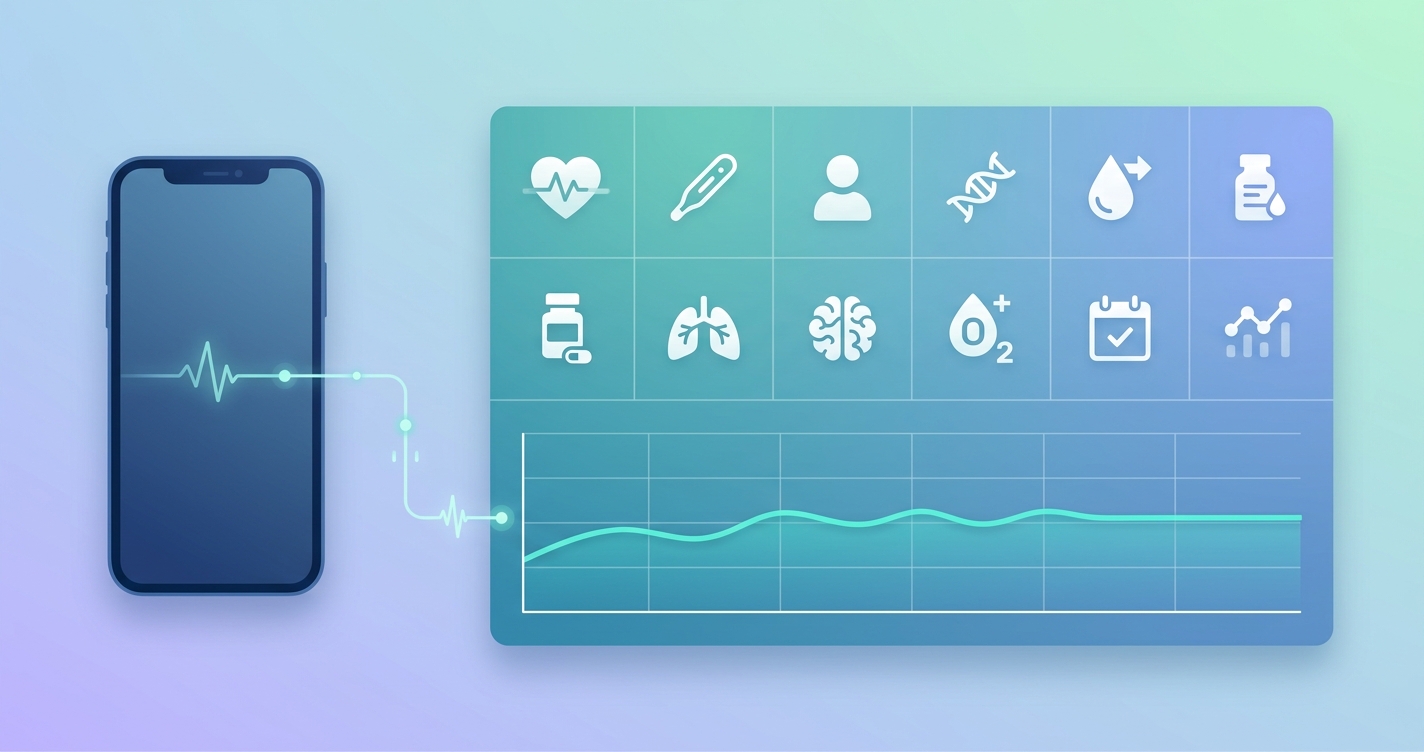
The operational integrity of any remote care initiative depends entirely on continuous data flow. Health IT directors and clinical operations teams often design comprehensive care pathways, only to watch program efficacy degrade because patients stop transmitting their daily readings. Finding ways to improve RPM patient adherence is not merely a behavioral challenge; it is a fundamental architectural requirement. If the underlying technology stack creates friction, patients will inevitably abandon the hardware, creating blind spots for clinical teams and immediately halting the program's financial viability.
"In a 2024 systematic review of remote patient monitoring interventions, researchers observed that sustained patient engagement remains the primary barrier to clinical efficacy, yet integrated programs frequently achieve adherence rates exceeding 72 percent when technical barriers to data transmission are removed." (Tan, Sumner, Wang, and Yip, 2024)
Core infrastructure needed to improve RPM patient adherence
A common misconception among health systems is that patient reading compliance is purely a matter of clinical motivation. While patient education is necessary, technical friction is the primary driver of program attrition. When a patient measures their blood pressure or heart rate, the data must travel from the peripheral device to the clinical dashboard without requiring manual intervention, secondary applications, or complex pairing protocols.
To effectively improve RPM patient adherence, IT teams must evaluate the data latency and synchronization reliability of their chosen hardware. Devices relying on patient-managed Bluetooth connections frequently experience sync failures following mobile operating system updates. When a patient attempts to take a reading and receives an error message, or when they take a reading that fails to appear in the provider portal, their trust in the system diminishes. Cellular-enabled hubs offer a more reliable alternative, but they still require physical hardware management, battery maintenance, and cellular network availability in rural areas.
Furthermore, the administrative overhead required to manage failing devices drains IT resources. Every support ticket generated by a patient struggling with a device represents a leak in operational efficiency. Health systems that transition to zero-configuration devices or software-based capture methods see an immediate reduction in help desk volume and a corresponding increase in data continuity.
From a billing perspective, technical reliability directly impacts revenue. The Centers for Medicare and Medicaid Services (CMS) enforces a strict RPM 16-day requirement, mandating that a program must capture and transmit at least 16 days of vital sign data within a 30-day billing period to qualify for reimbursement under specific CPT codes. If a Bluetooth pairing error causes a three-day data blackout, a patient who was otherwise compliant may fall below the 16-day threshold, rendering the entire month of clinical monitoring unbillable. Consequently, IT directors must prioritize data architectures that guarantee passive, frictionless transmission.
Friction-based vs. frictionless RPM workflows
| Workflow Attribute | High-Friction Model | Low-Friction Model |
|---|---|---|
| Device Setup | Patient downloads third-party app and pairs via Bluetooth. | Zero-setup cellular device or optical camera capture via SMS link. |
| Data Transmission | Patient must open an app and press a sync button. | Passive transmission immediately following the physiological measurement. |
| Clinical Feedback | Data lives in a siloed vendor portal requiring separate logins. | HL7 FHIR integration routes data directly into the EHR flowsheet. |
| Billing Documentation | Manual counting of days to verify the 16-day threshold. | Automated EHR alerts tracking patient reading compliance for CPT codes. |
The structural barriers that degrade remote monitoring engagement typically manifest in the following ways:
- Complex device pairing protocols that break after routine smartphone updates.
- Lack of immediate visual confirmation to the patient that a reading was successfully received by the clinic.
- Delayed clinical feedback caused by siloed data portals rather than native EHR integration.
- Hardware degradation, such as failing batteries in cellular hubs, that goes unnoticed by the IT support team.
- Overwhelming alert fatigue for providers, resulting in delayed patient follow-up and reduced patient motivation.
Industry applications for telehealth RPM workflows
Optimizing the telehealth RPM workflow requires mapping the data journey from the patient's home to the physician's electronic health record. Different clinical applications demand different levels of engagement and data frequency, but all rely on a seamless user experience to maintain adherence.
Cardiology and hypertension management
In cardiology, consistent blood pressure tracking is the cornerstone of adjusting antihypertensive medications. Health systems that integrate RPM data directly into EHR flowsheets using HL7 FHIR standards can trigger automated clinical decision support rules. If a patient records three consecutive hypertensive readings, the EHR can automatically queue a telehealth encounter. When patients see that their daily readings directly influence their care in real time, their adherence rates increase. The feedback loop validates their effort.
Post-Surgical Discharge
Post-surgical monitoring programs typically run for shorter durations, such as 30 to 90 days, but require high compliance to prevent hospital readmissions. In these scenarios, mailing heavy hardware kits introduces logistical delays. Telehealth operations teams are increasingly looking for ways to capture vitals using the devices patients already own. By sending a secure SMS link that opens a web-based capture tool, health systems can bypass the hardware deployment phase entirely, capturing data within hours of discharge and improving early adherence.
Chronic care management overlap
Programs managing multiple chronic conditions often combine RPM with Chronic Care Management (CCM) services. In these complex programs, patient fatigue is a significant risk. Asking a diabetic, hypertensive patient to manage a glucometer, a blood pressure cuff, and a weight scale simultaneously often leads to burnout. Streamlining the hardware stack or utilizing unified data capture interfaces is critical to maintaining long-term compliance and meeting the requirements for both RPM and CCM billing codes.
Current research and evidence
The correlation between simplified data workflows and sustained patient engagement is well documented in recent medical literature. In a 2024 systematic review published in the Journal of Medical Internet Research, researchers Tan SY, Sumner J, Wang Y, and Wenjun Yip A evaluated the safety, adherence, and cost-related outcomes of remote monitoring interventions. The researchers noted that programs utilizing real-time feedback mechanisms and integrated clinical workflows consistently demonstrated higher long-term engagement compared to legacy systems requiring manual data entry.
Furthermore, a 2023 collaborative study involving HealthSnap, Prisma Health, and Virginia Cardiovascular Specialists analyzed a large-scale hypertension management program. The researchers observed 2,761 patients utilizing an EHR-integrated monitoring platform. Because the data routed directly into clinical workflows, providers could offer timely interventions. The study reported that a vast majority of these patients consistently uploaded 30 or more blood pressure readings over a 90-day period, far exceeding standard compliance benchmarks and easily satisfying the billing requirements for continuous monitoring.
In a separate 2023 analysis focused on care model design, researchers highlighted that clinical feedback loops are just as critical as the hardware itself. When patients transmit data into a void, never receiving acknowledgment from their provider, their adherence drops precipitously within the first four weeks. The integration of continuous data streams directly into the primary EHR interface allows care coordinators to send automated acknowledgments, reinforcing the value of the patient's daily routine.
Data from large ambulatory health systems corroborates these findings. Studies evaluating the operational implementation of RPM within integrated networks indicate that when technical barriers are minimized, patient compliance with care plan tasks reliably hits performance targets. These studies confirm that adherence is less about patient willingness and more about the usability of the deployed technology stack.
The future of remote monitoring engagement
As health systems scale their virtual care operations, the definition of monitoring hardware is evolving. The future of remote monitoring engagement relies on removing the physical hardware burden entirely. Traditional cuffs, scales, and cellular hubs require procurement, shipping, sanitization, and reverse logistics. This physical supply chain inherently limits scalability and introduces multiple points of failure that can negatively impact patient reading compliance.
Health IT directors are currently evaluating contactless vital sign capture technologies. By using the optical sensors standard in modern smartphones, patients can capture precise physiological data, such as heart rate and respiration, simply by looking into their device's camera. This transition from hardware-centric programs to software-defined capture methods eliminates the need for device pairing, battery maintenance, and shipping logistics.
When a patient only needs to click a secure link in an SMS message to transmit their daily vitals, the friction drops to near zero. This immediate, hardware-free approach ensures that data continues to flow, clinical teams retain visibility into patient health, and operations teams can confidently meet their billing thresholds month after month without dedicating massive resources to hardware management.
Frequently asked questions
What is the RPM 16-day requirement?
The 16-day requirement is a billing rule established by the Centers for Medicare and Medicaid Services (CMS). It states that for a provider to bill certain remote monitoring CPT codes, the health system must capture and transmit at least 16 days of vital sign data from the patient within a 30-day period. Failing to meet this threshold due to technical glitches or poor patient engagement means the clinical work performed during that period cannot be reimbursed under standard fee-for-service models.
How does IT infrastructure impact patient reading compliance?
IT infrastructure dictates the user experience. If a patient has to manually pair a Bluetooth device, open a separate application, and wait for data to sync, they are more likely to abandon the process. Passive, frictionless data architectures ensure that the act of taking a measurement automatically results in successful transmission directly to the care team.
Why do patients abandon remote monitoring programs?
Patients typically abandon programs due to technical frustration rather than a lack of health motivation. Common reasons include device syncing errors, dead batteries in cellular hubs, a lack of perceived feedback from their clinical team, and the fatigue of managing multiple peripheral devices simultaneously.
How can EHR integration improve adherence?
When data flows seamlessly into an Electronic Health Record via HL7 FHIR standards, providers can react to the data in real time. When patients receive prompt feedback or adjustments to their care plan based on their home readings, they understand the value of their effort, which reinforces consistent engagement and long-term participation.
Health IT teams looking to simplify their telehealth RPM workflow and improve RPM patient adherence are increasingly adopting contactless, frictionless data capture methods. Removing hardware logistics allows clinical programs to scale faster while ensuring consistent data transmission for billing and clinical oversight. Circadify is addressing this space by enabling systems to capture vitals directly through a smartphone camera, removing hardware barriers entirely. To learn more about integrating these capabilities directly into your existing care management systems and EHR flowsheets, review the developer documentation at https://circadify.com/solutions/telehealth.