How do I send my blood pressure readings to my doctor between visits?
Explore how remote patient monitoring (RPM) technology enables patients to automatically share home vitals with their doctor, streamlining the data flow into the EHR.
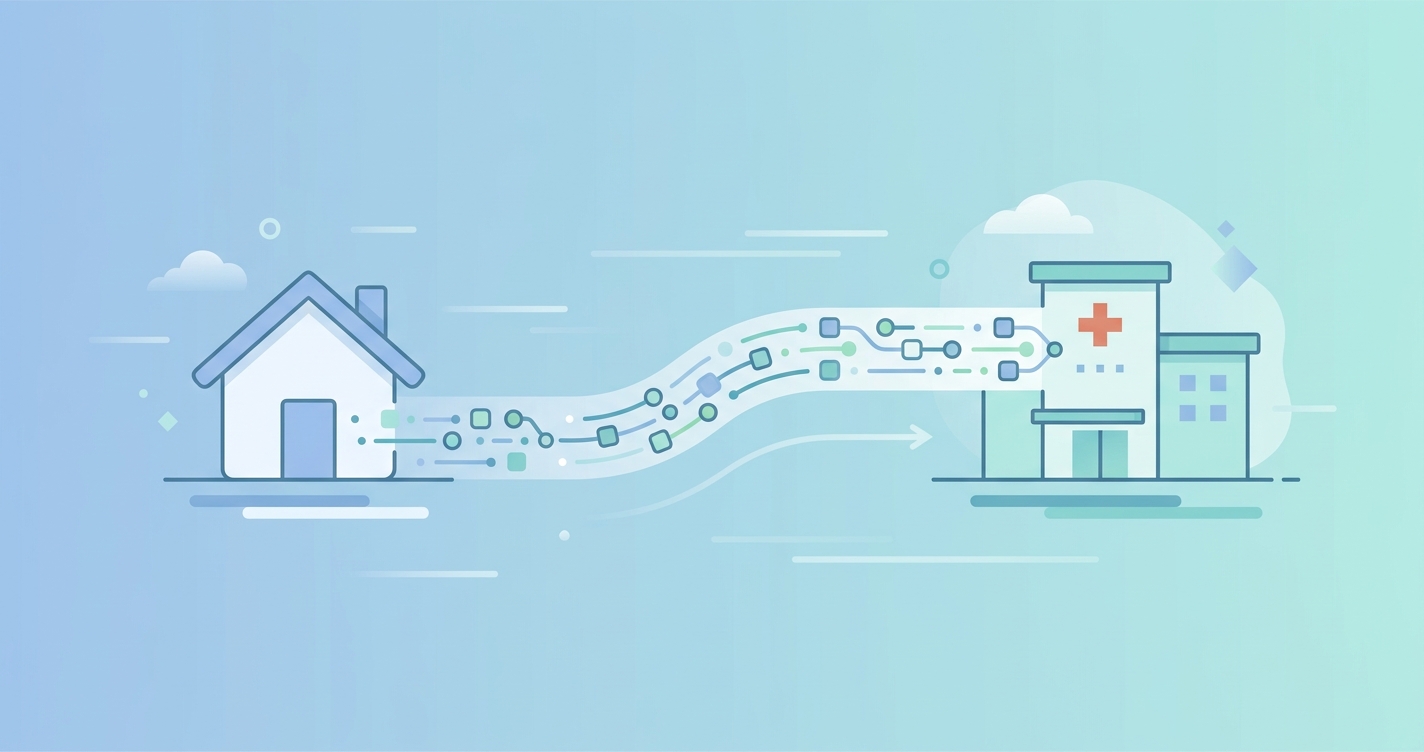
For patients managing chronic conditions like hypertension, the routine of measuring blood pressure at home is a familiar one. Yet, the method of getting those readings to a physician has remained stubbornly archaic, often involving handwritten logs, manual data entry into patient portals, or even fax machines. This gap in data transmission Creates a burden for patients. Prevents care teams from acting on potentially critical information in a timely manner. The core challenge is not in the measurement of vitals, but in the secure and efficient transit of that data from the patient's home directly into the clinical workflow. As health systems increasingly rely on patient-generated health data (PGHD) to manage populations, the need for a more integrated approach to share home vitals with doctor between visits has become a critical point of focus for health IT and telehealth operations teams.
"Among adults with a history of cardiovascular disease, 83% reported measuring their blood pressure at home, but only 39% shared their readings with their healthcare provider, a gap that highlights significant barriers in data communication." - American Heart Association, 2022.
The shift from manual reporting to automated RPM workflows
The traditional methods for patients to share home vitals with their doctor between visits are fraught with inefficiency, data integrity issues, and delays. Manual transcription is prone to human error, and portal uploads require patients to navigate what can often be complex user interfaces. More importantly, these methods place the data outside of the provider's primary workspace, the Electronic Health Record (EHR). This means a clinician, nurse, or care manager must manually retrieve this information and transfer it into the patient's chart, a workflow that is not scalable for managing hundreds or thousands of patients.
Remote Patient Monitoring (RPM) technology directly addresses this by creating an automated data pipeline. Instead of relying on the patient to act as a data courier, RPM systems use connected devices to transmit readings to a cloud platform, which then routes the structured data into the EHR. This process is governed by interoperability standards like HL7 FHIR (Fast Healthcare Interoperability Resources), which ensure that data such as blood pressure, glucose levels, or weight can be ingested and correctly filed within the patient's record. A study by Kelli T. Ryckman at the University of Iowa (2021) on RPM for hypertensive patients found that automated, real-time data transmission led to more consistent and timely interventions compared to manual reporting. The data appears in the EHR as a flowsheet entry, indistinguishable from data captured within the hospital, allowing for seamless integration into existing clinical decision support rules, dashboards, and analytics.
| Data Transmission Method | Patient Effort | Clinician Workflow Integration | Data Integrity | Timeliness |
|---|---|---|---|---|
| Manual Log & Verbal Report | High | None (manual entry required) | Low (prone to error) | Delayed |
| Patient Portal Upload | Medium | Low (data is siloed) | Medium | Delayed |
| Fax or Email | Medium | None (requires scanning/manual entry) | Low | Delayed |
| Integrated RPM Platform | Low (automated) | High (direct EHR integration) | High (validated data) | Real-time |
Industry Applications
For health IT directors and telehealth operations leaders, the implementation of an integrated RPM data workflow has several profound implications for care delivery and system efficiency.
Chronic care management at scale
By automating the flow of vitals, health systems can scale their chronic care management programs without a linear increase in administrative staff. RPM platforms can be configured to:
- Automatically flag readings that fall outside of preset parameters.
- Trigger alerts to the appropriate care team member.
- Reconcile data from multiple devices and vendors into a single source of truth.
Closing gaps in care
The period between office visits is often a blind spot for clinicians. Consistent, objective data from home monitoring allows for a more proactive and preventative approach. If a patient's blood pressure trends upwards over several days, the system can alert a nurse to intervene before the situation escalates to a point requiring an emergency visit.
Improving workflow for clinicians
The primary value of integrating RPM data into the EHR is that it meets clinicians where they already are. Instead of logging into a separate, third-party portal, they can view home vitals alongside lab results, medications, and other clinical data. This contextualized view is essential for making informed decisions and reduces the "alert fatigue" that comes from managing multiple, disparate systems.
Current research and evidence
The evidence base supporting the efficacy of RPM for chronic disease management is robust and growing. Research has consistently shown that enabling patients to share home vitals with doctors between visits through automated systems leads to better clinical outcomes and more efficient care. A pivotal study published in Hypertension (2020) by a team led by Dr. Karen Margolis at the HealthPartners Institute demonstrated that hypertensive patients using a Bluetooth-connected blood pressure cuff coupled with pharmacist-led interventions achieved significantly better blood pressure control than those receiving usual care.
Furthermore, research is now examining the specific technical and workflow integrations that maximize these benefits. A 2023 analysis from the KLAS Research institute on telehealth and RPM platforms found that the deepest clinical value was realized by organizations that prioritized deep EHR integration, using standards like HL7 FHIR to embed RPM data directly into provider workflows rather than relying on standalone dashboards. The ability to trigger automated actions and populate clinical documentation directly from incoming data was cited as a key differentiator.
The future of remote data integration
Looking ahead, the integration of patient-generated health data will become more sophisticated and seamless. The concept of a "digital twin" or a continuous, real-time model of a patient's physiological state, is moving from theory to practice. This will be fueled by the fusion of data from not just dedicated medical devices, but also from consumer wearables and ambient sensors. The role of the health IT infrastructure will be to ingest, standardize, and secure this high-volume data stream. The use of SMART on FHIR applications will likely become the standard for "plugging in" various RPM data sources into the EHR, allowing health systems to adopt new monitoring technologies without requiring complex, custom integration projects for each one. This future depends on a flexible, standards-based architecture that can handle the volume and variety of data from an ever-expanding ecosystem of connected devices.
Frequently asked questions
Q: How is the data from a home blood pressure cuff sent to the doctor's EHR? A: In an RPM system, a cellular or Bluetooth-enabled blood pressure cuff sends the reading to a secure cloud platform. This platform, acting as an intermediary, formats the data according to interoperability standards like HL7 FHIR and then transmits it to the health system's EHR. It appears directly in the patient's chart, often in a flowsheet, without manual data entry.
Q: Is it secure to share home vitals with my doctor between visits this way? A: Yes. RPM platforms are designed to be HIPAA-compliant, using robust encryption for data both in transit and at rest. The connection to the EHR is established through secure, authenticated channels, ensuring that patient data is protected at every step of the process.
Q: What is the benefit of integrating RPM data directly into the EHR? A: Direct EHR integration is critical for clinical workflow. It allows providers to see patient-generated data within the same system they use for all other clinical tasks. This avoids the need to log into separate portals, reduces the risk of data entry errors, and allows the data to be used by clinical decision support systems to generate automated alerts and insights.
The challenge of routing patient-generated health data from homes to the clinical workflow is a primary focus for integration teams. For telehealth operations and Health IT directors evaluating how to best implement these data pathways, understanding the underlying technology is key. Circadify is actively working in this space, providing robust solutions for EHR integration that streamline how you share home vitals with doctors between visits. To learn more about our telehealth and RPM integration capabilities, visit our solutions guide at circadify.com/solutions/telehealth.