How do I keep my doctor updated on my health without driving in every week?
Explore how remote patient monitoring (RPM) allows patients to update their doctors on their health without frequent office visits, focusing on the data integration and workflow.
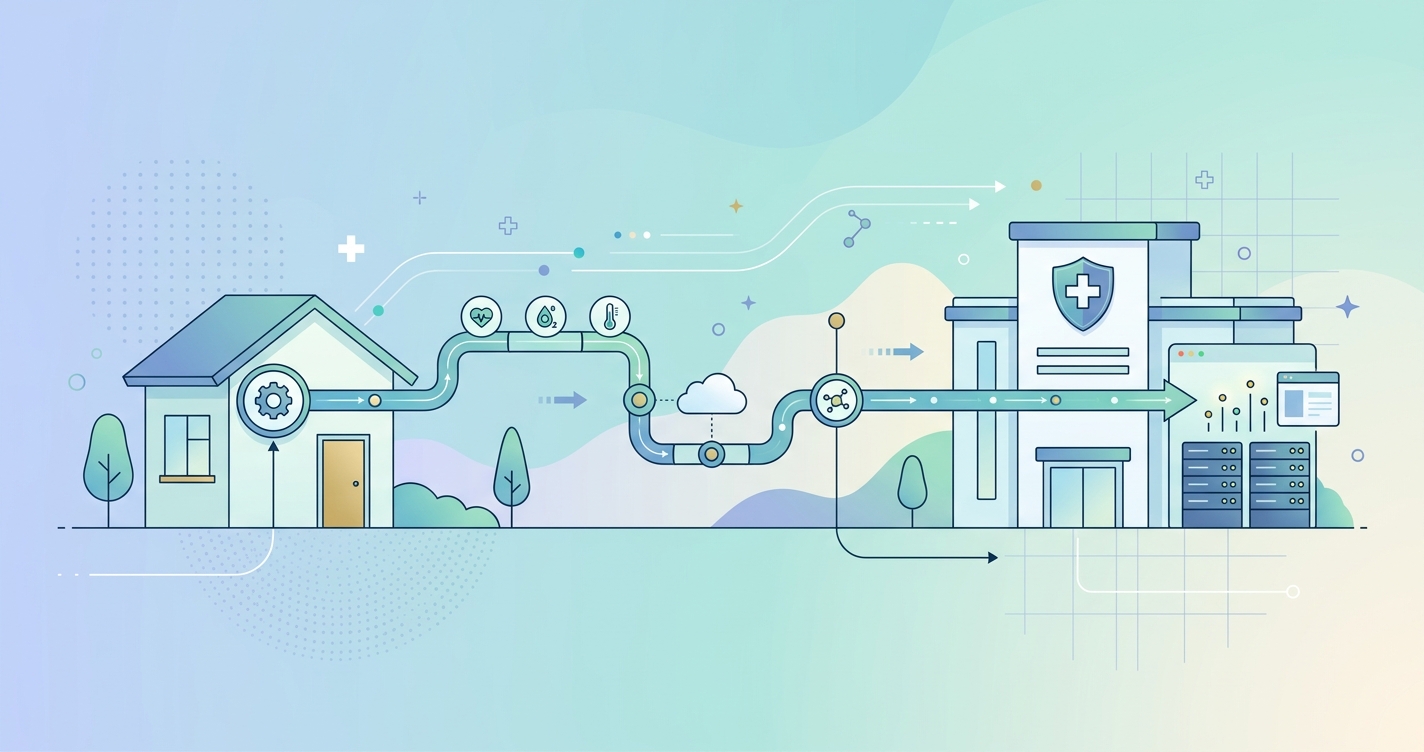
The logistical burden of managing a chronic condition is a significant, often unspoken, aspect of patient care. Arranging transportation, taking time off work, and navigating the healthcare system for routine check-ins can be as taxing as the condition itself. For health systems, the reliance on in-person visits for simple data collection creates workflow bottlenecks and limits clinical capacity. The need to update doctor health without office visit is not just a matter of patient convenience; it is an operational imperative for scalable, proactive care. Remote Patient Monitoring (RPM) serves as the critical bridge, creating a continuous, asynchronous connection between patients and their care teams that complements traditional episodic visits.
"In a 2022 survey, 77% of healthcare providers reported that telehealth and RPM led to more efficient use of their time and resources, allowing them to focus on higher-acuity patients while still monitoring those with chronic conditions effectively."
The technical framework for asynchronous health updates
For a patient, the ability to update doctor health without office visit feels like a simple convenience. For a health IT director or telehealth operations lead, it represents a fundamental shift in dataflow and clinical workflow. It is the transition from an appointment-based, manual data entry model to a continuous, automated, and integrated one. This shift requires a robust technical framework capable of ingesting, normalizing, and presenting patient-generated health data in a clinically meaningful context.
The core challenge is not just collecting the data, it is making it actionable. A simple log of blood pressure readings in a patient portal is a step above a handwritten journal, but it still places the burden of interpretation squarely on the provider, who must manually review and transcribe it. True operational efficiency is achieved when this data flows directly into the Electronic Health Record (EHR) as structured, analyzable information, capable of triggering automated alerts and populating provider dashboards without manual intervention.
| Data Transmission Method | Data Timeliness | Data Integrity | Clinician Workflow Impact | Scalability |
|---|---|---|---|---|
| Phone Calls / Voicemail | Low (Asynchronous, but requires manual retrieval) | Low (Risk of transcription error) | High (Disruptive, requires manual data entry) | Very Low |
| Patient Portal Manual Entry | Medium (Patient-dependent) | Medium (Prone to input error, data is unstructured) | Medium (Requires provider to actively seek and review) | Low |
| Integrated RPM Platform | High (Automated, near real-time) | High (Direct from device, no transcription) | Low (Data populates EHR, triggers alerts automatically) | High |
Industry applications of integrated patient data
Automating the flow of patient data supports several key initiatives within a health system, transforming workflows from reactive to proactive.
Chronic care management (ccm)
For patients with conditions like hypertension, diabetes, or heart failure, daily vital signs are a critical indicator of their status. An integrated RPM system ensures these readings are captured and transmitted without patient or staff intervention.
- Automated Documentation: Systems can automatically log the time spent on data review, simplifying billing for CMS codes.
- Proactive Alerts: Rules-based engines can flag readings that fall outside of physician-set parameters, alerting the care team to a potential issue before it becomes acute.
- Trend Analysis: Structured data feeds directly into analytics platforms, allowing clinicians to see trends over time rather than relying on a single snapshot from an office visit.
Post-Discharge Monitoring
Reducing hospital readmissions is a primary goal for all health systems. RPM provides a safety net for patients during the vulnerable period after they leave the hospital. By monitoring vitals like weight, blood pressure, and oxygen saturation, care teams can intervene quickly if they see signs of decompensation, preventing a costly and disruptive return to the hospital.
Augmenting telehealth visits
An effective virtual visit requires objective data. When a telehealth platform is integrated with an RPM data stream, the provider has access to the patient's latest vital signs before the visit even begins. This makes the encounter more efficient and clinically valuable, moving it beyond a simple conversation to a data-informed consultation. Research by Dr. David Levine and his team at Brigham and Women's Hospital (2020) has shown that home hospital and remote monitoring programs can significantly reduce costs and improve outcomes, underscoring the power of this model.
Current research and evidence
The pivot to remote data collection is supported by a growing body of evidence. A study published in the New England Journal of Medicine Catalyst (2021) involving 19,963 patients found that RPM programs were associated with a significant reduction in hospitalizations and emergency department visits. The researchers noted that success was contingent on the program's integration into existing clinical workflows, preventing it from becoming an isolated data silo.
Furthermore, work from the UCSF Center for Digital Health Innovation has highlighted the importance of user-centered design in both patient-facing tools and provider dashboards. Dr. Aaron Neinstein has emphasized that for RPM data to be useful, it must be presented in a way that is easily digestible and integrated into the provider's standard work, a challenge that requires deep interoperability via standards like HL7 FHIR.
The future of remote data integration
The trajectory of RPM is moving toward more passive and seamless data collection. While current programs often rely on Bluetooth-enabled cuffs, scales, and meters, the next iteration involves contactless monitoring solutions that use cameras and sensors to capture vitals with no patient interaction required. This evolution will only increase the volume and velocity of data, making robust, standards-based integration even more critical. For Health IT teams, preparing for this future means architecting a data infrastructure built on interoperability standards like HL7 FHIR. This ensures that as new monitoring technologies emerge, they can be plugged into the existing clinical ecosystem without requiring bespoke, one-off integrations.
Frequently asked questions
Q: How is my health data kept secure when it's sent from home?
A: Secure data transmission is a cornerstone of any reputable RPM platform. Data is encrypted both at rest (on the device and servers) and in transit to the clinic. These systems are designed to be HIPAA-compliant, employing the same security standards used to protect information within the hospital's own EHR.
Q: Will my doctor be alerted every time I take a reading?
A: Not typically. To prevent "alert fatigue," clinicians set specific thresholds for each patient. The system will only generate an alert if a reading falls outside of these safe parameters. All other data is simply logged in your record for the care team to review as needed, often to track trends over time.
Q: What is the difference between a telehealth visit and remote patient monitoring?
A: A telehealth visit is a real-time, virtual appointment with a provider, essentially replacing a traditional office visit. Remote patient monitoring is an asynchronous process where devices collect and transmit your health data (like blood pressure or weight) to your care team automatically between visits. RPM provides the data that can make telehealth visits more informed and effective.
For Health IT directors and telehealth operations leaders, the challenge of enabling patients to update doctor health without office visit is fundamentally an integration problem. Solving it requires a platform that Collects patient data reliably. Delivers it seamlessly into the hands of clinicians in a format that enhances, rather than disrupts, their workflow. Circadify is focused on providing this critical integration layer, ensuring that vital patient data flows from the home to the EHR efficiently and securely. To learn more about our EHR integration guides and API documentation, visit circadify.com/solutions/telehealth.