Remote Monitoring Implementation Guide for Small Clinics
A practical remote monitoring implementation guide for lean clinics standing up RPM without a large IT team, covering setup, staffing, and go-live.
Small clinics are entering remote patient monitoring at the exact moment the operational bar is rising. The economics now favor early movers, but the programs that stall almost always stall for the same reason: a practice treats RPM as a device purchase rather than a workflow project. This remote monitoring implementation guide is written for lean practices, the kind where the EHR administrator, the billing lead, and the head nurse are sometimes the same three people, and where standing up a program has to happen without a dedicated IT department. The goal here is not to sell the concept of RPM. It is to map the sequence of decisions, the staffing math, and the integration checkpoints that separate a program that bills cleanly in month two from one that quietly collapses under unreviewed data.
The global remote patient monitoring software and services market was estimated at USD 10.8 billion in 2024 and is projected to reach USD 65.0 billion by 2030, a compound annual growth rate of 34.9 percent, with providers including clinics holding the largest end-user share at 44.0 percent (Grand View Research, 2024).
A practical remote monitoring implementation guide
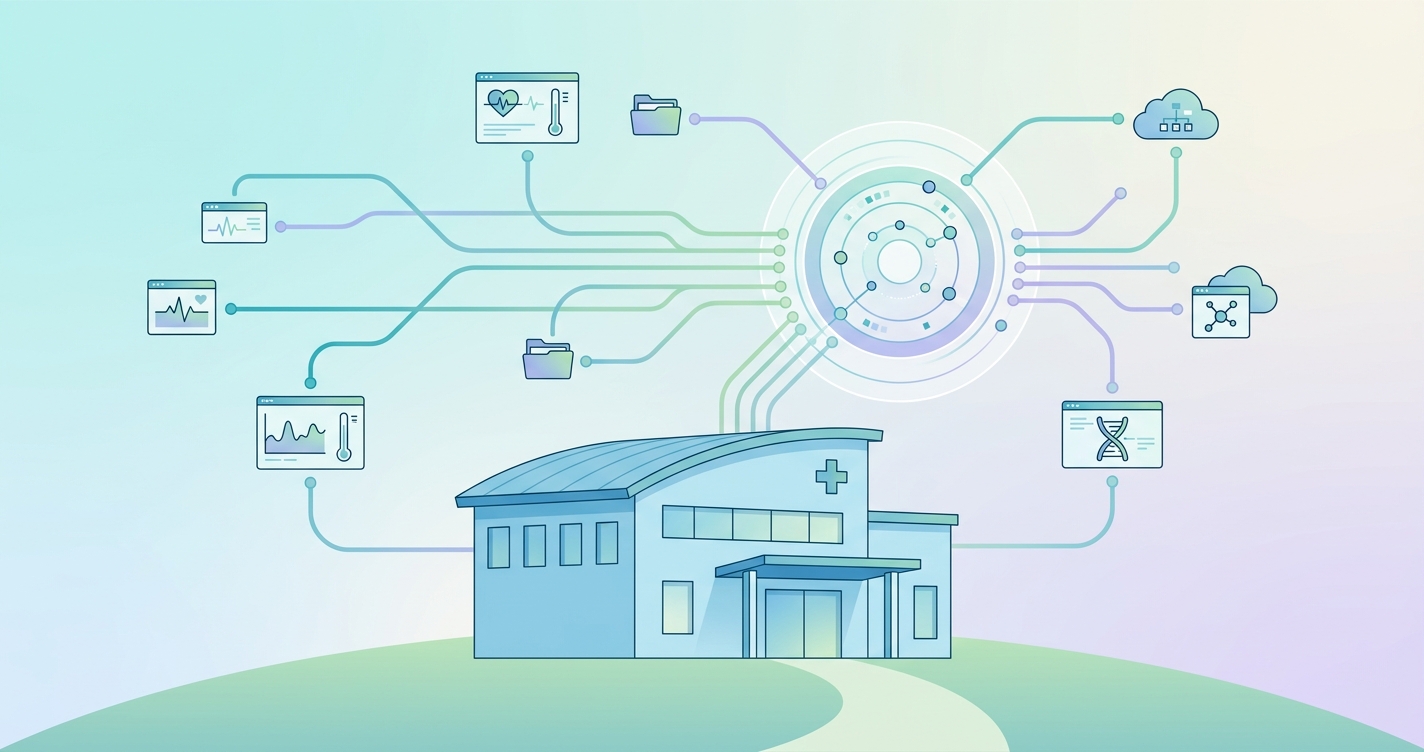
The reason RPM looks deceptively simple is that the clinical premise is intuitive: send a patient home with a connected blood pressure cuff or glucometer, watch the readings, intervene early. The complexity lives in the connective tissue. A working program has to move a reading from a device, into a data pipeline, into the EHR where a clinician can see it, and finally into a billing record that documents the time CMS requires for reimbursement. For a small practice, the temptation is to bolt RPM on as a side system with its own login and its own dashboard. That choice creates a parallel chart, double documentation, and the single most common failure mode in RPM: data that no one reviews because it lives somewhere clinicians never look.
A defensible RPM setup for a small practice starts with the reimbursement structure, because the codes dictate the workflow. The core Medicare codes are well established. CPT 99453 covers initial device setup and patient education. CPT 99454 covers the device supply and data transmission, and it requires readings on at least 16 distinct days in a 30-day period. CPT 99457 covers the first 20 minutes of monitoring and interactive communication in a calendar month, with 99458 adding each additional 20-minute block. Every one of those codes implies an operational requirement: enrollment, device logistics, a 16-day adherence threshold, and documented clinical time. Build the program backward from those requirements and the rollout becomes a checklist rather than a guessing game.
Rpm implementation steps and approaches compared
Lean clinics generally choose between three rollout models. The trade-offs are real, and the wrong choice for your staffing reality is what causes a program to launch and then quietly die.
| Approach | IT burden | Time to go-live | Monthly staffing need | Integration depth | Best fit |
|---|---|---|---|---|---|
| Standalone RPM portal | Low to moderate | 2 to 4 weeks | High (manual chart entry) | Shallow, separate login | Pilot of under 25 patients |
| EHR-integrated platform (FHIR) | Moderate setup, low ongoing | 4 to 8 weeks | Moderate (data flows in) | Deep, readings in the chart | Practices scaling past 50 patients |
| Fully outsourced RPM service | Low | 3 to 6 weeks | Low (vendor does monitoring) | Varies by vendor | Clinics with no nursing bandwidth |
The standalone portal is the fastest to demonstrate, which is why so many pilots start there. It is also the model that breaks first, because every reading a nurse reviews has to be re-keyed or screenshotted into the EHR to support billing. An EHR-integrated approach built on HL7 FHIR pushes vital signs directly into the patient record as structured observations, which removes the double-entry tax and keeps the clinical and billing documentation in one place. Outsourcing shifts the labor entirely to a vendor, which protects clinician time but reduces the practice's visibility into its own patients.
Before go-live, a lean clinic should lock down a short list of decisions:
- Which one or two chronic conditions the program will target first, usually hypertension or diabetes, where device economics and adherence are strongest.
- Who owns daily data review, and what their licensure allows them to bill under general supervision.
- How devices reach patients, whether shipped pre-configured (cellular) or set up in clinic (Bluetooth plus a hub).
- What the escalation path is when a reading crosses a threshold, including who calls the patient and how that contact is documented.
- How the platform writes back to the EHR, and whether it supports the FHIR Observation resource your system can ingest.
Industry applications for lean practices
Primary care and chronic disease management
For an independent primary care practice, RPM is most defensible when it is narrow. Starting with a single hypertension cohort lets a small team build muscle memory around enrollment scripts, adherence nudges, and the 16-day threshold before expanding to diabetes or heart failure. The cellular cuff model removes home Wi-Fi as a variable, which matters disproportionately for older patients, and it pushes the practice's first integration test toward data ingestion rather than patient troubleshooting.
Specialty Clinics
Cardiology, endocrinology, and nephrology practices tend to have patient populations where continuous data changes management decisions, not just documentation. For these clinics the integration depth matters more, because clinicians want trends visible alongside labs and medications inside the existing chart. A specialty practice running RPM as a standalone system loses the comparative context that makes the data clinically useful.
Rural and resource-constrained settings
Clinics with thin staffing and limited broadband often benefit most from a hybrid: cellular-connected devices to bypass home connectivity issues, paired with either an integrated platform or a partial outsourcing arrangement for after-hours monitoring. The staffing math is the constraint here, not the technology.
Current research and evidence
The reimbursement framework has been the dominant driver of adoption. CMS established the current RPM code family progressively, and the structure of CPT 99457 and 99458 directly ties revenue to documented clinical time, which is why staffing models matter as much as device selection. Industry guidance consistently points to a team-based approach for these codes: registered nurses, licensed practical nurses, and medical assistants conducting data review and interactive communication under appropriate supervision, rather than physicians absorbing the monitoring load (CareCloud, 2024).
Physician appetite has been measurable for years. An American Medical Association survey found 53 percent of physicians expressing interest in using remote monitoring services, a signal that demand was not the bottleneck (American Medical Association, 2021). The bottleneck has been operational capacity, and that is where the market data is instructive. The provider segment, including clinics, holding 44.0 percent of the RPM software and services market in 2023 indicates that adoption has moved well past large health systems into outpatient settings (Grand View Research, 2024). For small practices, the practical lesson from the evidence is that programs succeed or fail on the consistency of data review and the cleanliness of billing documentation, not on the sophistication of the hardware.
The future of RPM implementation for small clinics
Two shifts will shape the next few years. The first is regulatory. CMS revisits RPM rules annually through the Physician Fee Schedule, and proposals affecting the data-collection thresholds and the introduction of additional digital monitoring codes are under active discussion for upcoming rule cycles. A practice that builds its workflow rigidly around the current 16-day requirement may find itself re-engineering, so flexible, configurable platforms hold an advantage.
The second shift is interoperability. As more practices standardize on FHIR-based exchange, the friction of getting device data into the chart drops, and the standalone-portal model becomes harder to justify. The clinics positioned best are the ones that treat RPM data as structured clinical data from day one, mapped to standard observation formats and reconciled against the EHR rather than parked in a side system. For lean teams, this is good news: the more the integration is solved at the platform layer, the less a program depends on having an IT department at all.
Frequently asked questions
How long does it take a small clinic to launch an RPM program?
Most lean practices can reach go-live in four to eight weeks for an EHR-integrated rollout, or two to four weeks for a small standalone pilot. The timeline is driven less by technology setup than by deciding the target cohort, assigning data-review ownership, and confirming your EHR can ingest the device data.
How many staff do I need to run RPM in a small practice?
It scales with patient volume rather than requiring dedicated hires at first. Because CPT 99457 requires 20 minutes of clinical time per patient per month, many small clinics begin with an existing nurse or medical assistant managing a panel of 50 to 100 patients before adding dedicated staff. Some outsource monitoring entirely to preserve in-house bandwidth.
Do I need an IT department to implement RPM?
No. The point of a workflow-integrated approach is to move the technical burden to the platform layer. A practice with no IT department can run RPM if the platform handles device provisioning and writes data into the EHR through a standard interface such as FHIR, leaving clinic staff to focus on patient care and documentation.
What is the most common reason small clinic RPM programs fail?
Unreviewed data that never makes it into the chart. When readings live in a separate portal that clinicians do not check, the practice cannot bill the time-based codes and patients lose the early-intervention benefit. Keeping RPM data inside the existing workflow is the single biggest protection against failure.
Circadify is addressing this space directly, building RPM data that plugs into existing EHR and telehealth workflows through HL7 FHIR rather than forcing lean practices to manage a separate system. Small-practice IT leads can review the integration documentation and EHR setup guides at circadify.com/solutions/telehealth to map a quick-start onboarding path.