RPM and Clinical Decision Support: How They Work Together
Explore the integration of Remote Patient Monitoring (RPM) and Clinical Decision Support (CDS) to improve patient outcomes, streamline workflows, and enable proactive care.
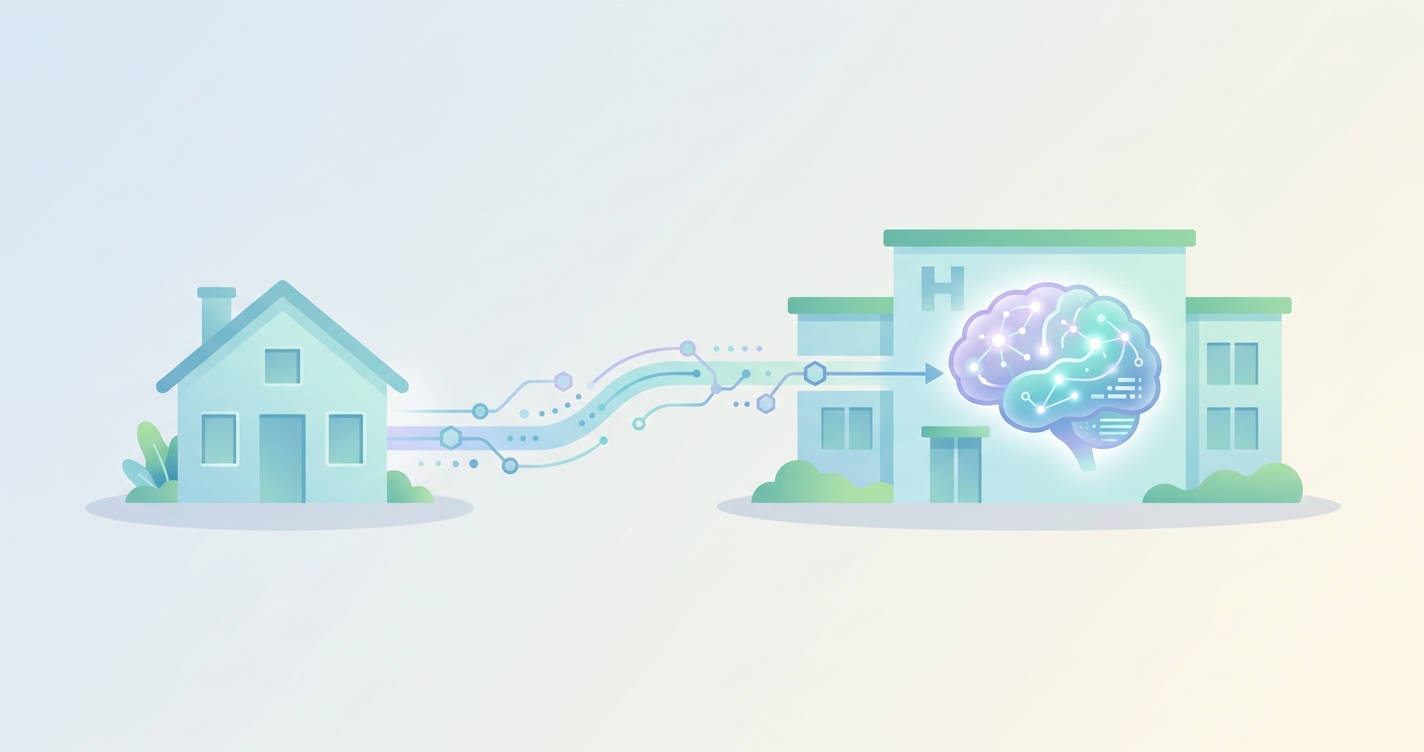
The operational logic of healthcare is shifting from reactive interventions to proactive, data-driven care management. This transition is heavily influenced by the ability of health systems to Collect vast amounts of patient data from outside the hospital walls. To make that data actionable at the point of care. Remote Patient Monitoring (RPM) provides the continuous stream of data, but without an intelligent layer to interpret and contextualize it, clinicians are left with a flood of information that is difficult to use. This is where the integration of RPM and Clinical Decision Support (CDS) becomes a critical component of modern healthcare delivery, transforming raw data into clinical guidance.
"A 2022 study published in the Journal of Medical Internet Research found that when RPM data was integrated into clinical decision support systems, it was associated with a 15% reduction in hospital readmissions for patients with chronic heart failure."
The convergence of RPM and clinical decision support
At its core, RPM clinical decision support represents the fusion of two powerful health technologies. On one side, you have RPM platforms collecting physiological data, like blood pressure, glucose levels, and oxygen saturation, from patients in their homes. On the other, you have Clinical Decision Support systems, which are tools, often integrated within an Electronic Health Record (EHR), that provide clinicians with knowledge and person-specific information, intelligently filtered or presented at appropriate times, to enhance health and health care.
When these two systems work in concert, the RPM data stream feeds directly into the CDS engine. Instead of simply triggering a basic high/low alert, the integrated system can analyze trends, compare data against a patient's specific history and comorbidities, and reference evidence-based clinical guidelines. The output is a sophisticated, context-aware recommendation delivered directly within the clinician's workflow. This moves the needle from simple data presentation to true decision support, helping to answer the critical question: "What should I do with this piece of information for this specific patient right now?"
The technical backbone for this integration relies on interoperability standards, primarily HL7 FHIR (Fast Healthcare Interoperability Resources). FHIR enables the seamless exchange of data between the RPM platform and the EHR-embedded CDS. This ensures that vital signs are not siloed in a separate dashboard but are part of the comprehensive patient record, available for analysis by the health system's core clinical logic engines.
| Feature | Standalone RPM System | Integrated RPM + CDS |
|---|---|---|
| Data Flow | RPM data resides in a separate portal or dashboard. | RPM data is ingested directly into the EHR via HL7 FHIR. |
| Alerting | Basic high/low threshold alerts (e.g., BP > 140/90). | Contextual alerts based on trends, patient history, and guidelines. |
| Clinical Workflow | Requires clinicians to log into a separate system. | Recommendations and alerts appear within the native EHR workflow. |
| Decision Process | Clinician manually interprets raw data and decides on action. | System provides evidence-based recommendations for intervention. |
| Scalability | Becomes overwhelming for staff as patient volume grows. | Automates initial triage and flags highest-risk patients. |
Industry Applications
The integration of RPM and CDS is not a theoretical exercise; it has tangible applications across various healthcare domains that are of particular interest to health IT and telehealth operations teams.
Chronic disease management
For conditions like hypertension, diabetes, and COPD, continuous monitoring is key. An integrated RPM clinical decision support system can:
- Identify concerning trends in a diabetic patient's glucose readings over several days, even if no single reading breaches a critical threshold.
- Recommend a medication adjustment based on consistently high blood pressure readings, cross-referenced with the patient's current medication list in the EHR.
- Automate the delivery of educational materials to a patient's portal when their weight shows a steady increase, a key indicator for heart failure management.
Post-acute care and readmission reduction
The transition from hospital to home is a vulnerable period for patients.
- An RPM-CDS system can monitor a post-surgical patient for signs of infection (e.g., elevated heart rate and temperature).
- It can flag a lack of engagement with prescribed monitoring, suggesting a follow-up call from a care coordinator.
- By providing early warnings, these systems can help prevent complications that would otherwise lead to a costly and disruptive hospital readmission.
Population health management
At a larger scale, the aggregated, structured data from RPM-CDS workflows is invaluable for population health initiatives. Health IT teams can use this data to:
- Identify high-risk cohorts within a patient population that may benefit from proactive outreach.
- Analyze the effectiveness of different care protocols based on real-world patient data.
- Better allocate clinical resources to the patients who need them most.
Current research and evidence
The evidence base supporting the components of an RPM-CDS strategy is growing. A systematic review by Noah et al. (2022) in the Journal of Medical Internet Research highlighted that RPM interventions are most effective when they include structured data transmission and timely review, a process significantly enhanced by CDS. Similarly, research by Sutton et al. (2020) emphasized that for RPM to be effective, it must be integrated into the broader care delivery model, not function as a standalone gadget.
However, challenges remain. A realist review in BMJ Open noted the risk of "alert fatigue," where clinicians are inundated with so many notifications that they begin to ignore them. This highlights the need for intelligent CDS that provides well-filtered, highly relevant recommendations rather than just more noise. The design of the EHR integration is critical; the information must be presented in a way that is intuitive and actionable for the clinical end-user.
The future of RPM clinical decision support
The trajectory for RPM clinical decision support is pointed towards greater automation and intelligence. The next generation of these systems will likely incorporate machine learning models capable of predicting patient deterioration hours or even days in advance. As data interoperability matures through standards like HL7 FHIR, we can expect to see more plug-and-play solutions that allow health systems to integrate various RPM data sources with their existing EHR and CDS infrastructure. The focus will continue to shift from simply collecting data to providing clinicians with the tools to use that data effectively and efficiently at scale.
Frequently asked questions
What is the difference between a standard alert and RPM clinical decision support? A standard alert is typically based on a single, predefined threshold (e.g., a blood pressure reading is too high). RPM clinical decision support is more advanced; it analyzes data trends over time, considers the patient's full clinical context from the EHR, and provides evidence-based recommendations for action, not just a notification of an abnormal value.
How does HL7 FHIR facilitate RPM and CDS integration? HL7 FHIR provides a standardized, API-based framework for exchanging healthcare information. For RPM and CDS, this means that data from a patient's monitoring device can be sent to the EHR in a consistent, structured format (as FHIR "Observations"). The CDS engine within the EHR can then easily ingest and analyze this data, as it is in a predictable and usable format.
What are the main implementation challenges? The primary challenges are technical and operational. Technically, ensuring seamless data flow and interoperability between the RPM platform and the EHR is crucial. Operationally, workflows must be redesigned to incorporate the new data and decision support tools. This includes training clinicians, defining clear protocols for responding to system-generated recommendations, and managing alert fatigue.
As a leader in providing developers with the tools to integrate vital signs monitoring into their platforms, Circadify is actively working to solve the data interoperability challenges that are foundational to building effective RPM and clinical decision support systems. To learn more about how to stream standardized, HL7 FHIR-compatible vitals data into your application, explore our integration documentation and EHR guides at circadify.com/solutions/telehealth.