RPM Patient Consent and Data Privacy: Health IT Guide
A Health IT guide to RPM patient consent and data privacy: consent documentation, data minimization, HIPAA obligations, and compliance-ready integration.
Most remote monitoring programs fail their first audit not because of a security breach, but because of a missing signature. The shift toward continuous data collection from home has outpaced the consent and privacy scaffolding that health systems built for episodic, in-clinic care. For Health IT directors, RPM patient consent and data privacy now sit on the critical path of program launch, reimbursement, and EHR integration. A monitoring platform that streams blood pressure readings flawlessly is still a liability if the patient never documented agreement, or if the system retains data fields no clinician will ever use.
The Centers for Medicare and Medicaid Services requires documented patient consent for RPM services, and failure to capture it can result in denied claims, forfeited Medicare reimbursement, and exposure during audits, according to 2025 CMS billing guidance published on Telehealth.HHS.gov.
Why RPM patient consent and data privacy demand a separate playbook
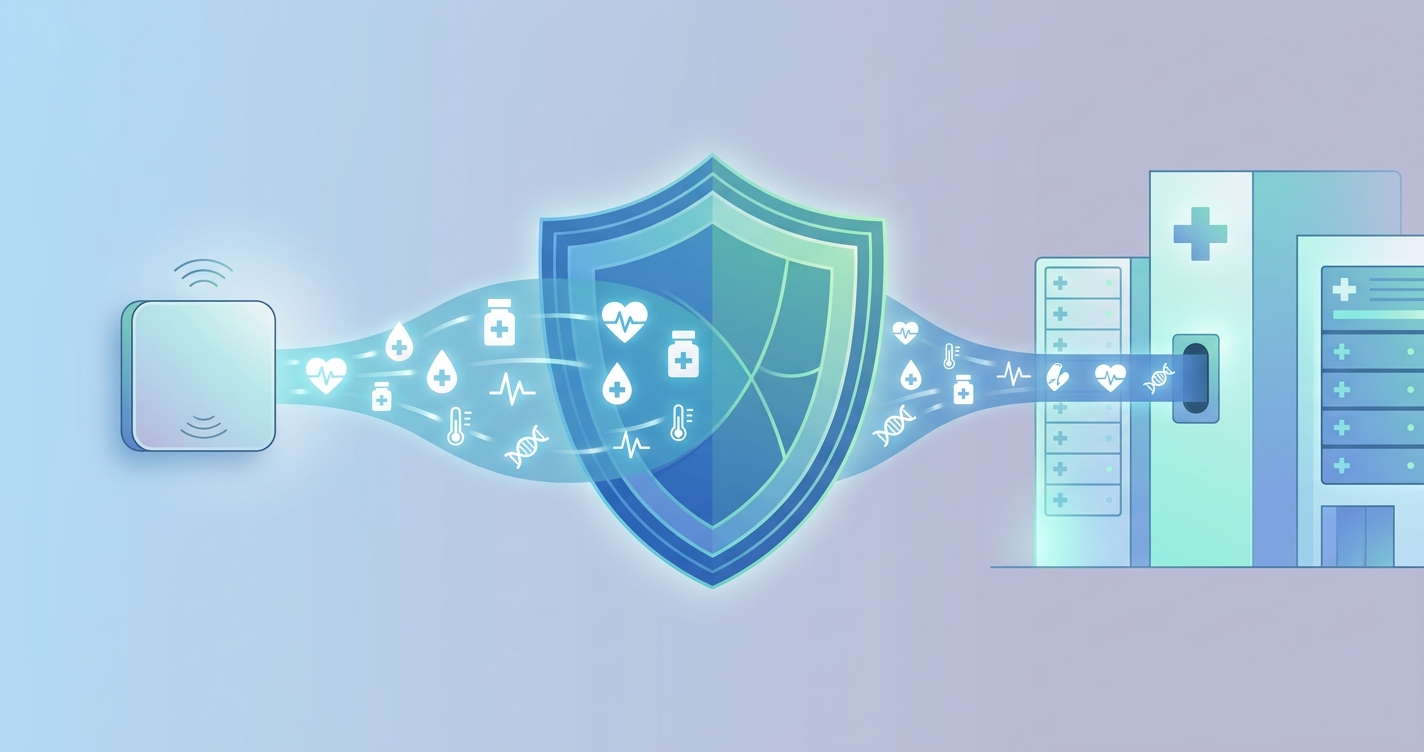
Traditional HIPAA workflows assume a discrete encounter: a patient arrives, signs a notice of privacy practices, and data is generated inside the four walls of a facility. Remote monitoring breaks that model. Data flows continuously from a device in a patient's kitchen, across consumer networks, through a vendor cloud, and into the EHR. Each hop introduces a consent question and a privacy obligation that did not exist in the in-clinic model.
The U.S. regulatory framework now treats this explicitly. Under guidance summarized by compliance analysts at Accountable (2025), the definition of protected health information has been read to include data collected from wearable devices, mobile health apps, and remote monitoring tools. That means the physiological stream itself, not just the chart note derived from it, is PHI from the moment of capture. RPM patient consent and data privacy therefore have to be engineered into the data pipeline, not bolted on at the documentation stage.
Three obligations sit at the center of any defensible program:
- Documented consent that is captured before data collection begins and retained in the patient record.
- Data minimization, so the program collects and transmits only what the clinical and billing use case requires.
- Privacy controls that follow the data across every system and business associate it touches.
Consent documentation: what auditors actually look for
CMS allows RPM consent to be either verbal or written, but it must be documented and stored in the patient's record. The distinction matters less than the durability of the record. Reviewers from CareVitality and CandiHealth (2025) note that defensible consent documentation captures a specific set of elements rather than a generic authorization.
A consent record that survives audit typically includes:
- The purpose and clinical benefit of the monitoring program.
- The categories of data collected and how they will be used.
- The privacy and security protections applied to that data, consistent with HIPAA.
- Patient responsibilities, such as taking readings on schedule.
- Patient rights, including the ability to revoke consent and the opt-out procedure.
- For Medicare, acknowledgment of any applicable cost-sharing.
The operational failure point is rarely the language. It is linkage. Consent captured in a vendor portal that never syncs to the EHR creates an orphaned record that billing and audit teams cannot retrieve. The integration design should treat consent status as a structured, queryable field tied to the patient resource, not a scanned PDF buried in a vendor system.
Consent and privacy models compared
Health IT teams generally choose among three architectural approaches to consent and privacy in RPM. Each carries different audit exposure and integration cost.
| Approach | Consent capture | Data minimization | Audit retrievability | Integration effort |
|---|---|---|---|---|
| Paper or PDF in vendor portal | Manual, one-time | Low, full device stream stored | Poor, siloed from EHR | Low upfront, high audit risk |
| EHR-native consent flag | Structured at enrollment | Moderate, depends on feed config | Strong, queryable in chart | Moderate, requires interface work |
| FHIR-based consent resource | Structured, machine-readable | High, scoped to needed observations | Strong, portable across systems | Higher upfront, lowest long-term risk |
The pattern most resilient to changing rules is the structured, standards-based model. When consent is represented as a discrete resource and data is scoped to specific observation types, a program can demonstrate both that the patient agreed and that the system collected nothing beyond the agreed purpose.
Data minimization as a privacy control
Data minimization is the most underused lever in RPM privacy. Many devices emit far more than the vital sign a program bills for: raw waveforms, accelerometer data, location metadata, battery telemetry, and device identifiers. Storing all of it expands the breach surface and complicates the data sharing rules that govern downstream use.
A minimization discipline for remote monitoring HIPAA consent involves several concrete decisions:
- Map each collected field to a documented clinical or billing purpose, and drop fields that map to neither.
- Transform device payloads at ingestion so only the needed observations persist in the system of record.
- Set retention windows aligned to clinical and reimbursement needs rather than retaining indefinitely by default.
- Segment identifiers so that analytics workloads operate on de-identified or pseudonymized data where full identity is unnecessary.
Minimization also simplifies RPM data sharing rules. When a health information exchange, a care management vendor, or a population health platform requests data, a minimized feed makes it straightforward to share only the elements covered by consent. This is where a standards-based pipeline pays off: mapping vital signs to discrete FHIR Observation resources lets a team share a single scoped resource rather than an entire device record.
Industry applications
Telehealth operations
For telehealth teams, patient privacy in telehealth hinges on the end-to-end path. CMS 2025 guidance, as summarized by compliance reviewers at Accountable, ends the COVID-era enforcement discretion and reinstates expectations for encrypted, HIPAA-aligned platforms. Consent workflows should be embedded in the enrollment step of the virtual visit so that monitoring never begins ahead of a documented agreement.
EHR integration teams
Integration teams own the hardest part: making consent status travel with the data. A consent revocation has to propagate fast enough to stop data flow and downstream sharing. Representing consent as a structured field that the ingestion layer checks before writing observations turns a policy promise into an enforceable control.
Compliance and revenue cycle
Because consent is a billing prerequisite, revenue cycle teams have a direct stake. RPM compliance requirements link reimbursement to documentation, so a missing or unretrievable consent record is a denied claim. Aligning the consent field with the billing trigger closes that gap.
Current research and evidence
The evidence base in 2025 points consistently toward stricter, more explicit obligations. CMS billing guidance on Telehealth.HHS.gov confirms that documented consent is a condition of RPM reimbursement and must be retained. Compliance analysts at Accountable (2025) report that previously addressable safeguards under the HIPAA Security Rule are being treated as mandatory, with multi-factor authentication and encryption of electronic PHI expected rather than optional, and the definition of PHI extended to wearable and remote monitoring data.
The Center for Connected Health Policy (CCHP) documents wide state-level variation in RPM and telehealth policy, including differing consent and modality rules across Medicaid programs. For multi-state health systems, this means a single federal consent template is insufficient; the consent and privacy layer has to accommodate state-specific requirements. Documentation reviewers at CandiHealth and CareVitality (2025) reinforce that the consent record must be specific, dated, and tied to the monitoring episode rather than a generic authorization captured years earlier.
The through-line across these sources is that consent and privacy are now structural program requirements, not paperwork formalities. Programs that treat them as data architecture problems are better positioned than those treating them as forms.
The future of RPM consent and data privacy
Three trends will shape the next phase. First, consent is becoming machine-readable. As FHIR adoption deepens, the Consent resource lets systems enforce scope and revocation automatically rather than relying on manual review. Second, data minimization is moving from best practice toward expectation, driven by emerging digital health privacy regulation that scrutinizes over-collection. Third, the boundary between clinical PHI and consumer device data continues to blur, pulling more device telemetry under HIPAA obligations and raising the bar for vendor business associate agreements.
For Health IT directors, the strategic implication is to build the consent and privacy layer once, in a portable and standards-based way, rather than re-engineering it each time a rule changes or a new device joins the program. A pipeline that captures structured consent, minimizes data at ingestion, and enforces scope on sharing will absorb regulatory change far better than a portal-and-PDF approach.
Frequently asked questions
Does CMS require written consent for RPM, or is verbal consent acceptable?
CMS permits either verbal or written consent for RPM, but the consent must be documented and retained in the patient's record. The practical requirement is a durable, dated, retrievable record linked to the monitoring episode, regardless of whether it was captured verbally or in writing.
What is data minimization in the context of remote monitoring?
Data minimization means collecting, transmitting, and retaining only the data elements that serve a documented clinical or billing purpose. For RPM, that often means transforming raw device payloads at ingestion so only the needed vital sign observations persist, which reduces breach surface and simplifies data sharing rules.
How should consent be handled when a patient revokes it?
Revocation should immediately stop further data collection and downstream sharing. The most reliable approach represents consent as a structured status that the ingestion and sharing layers check before processing data, so a revocation propagates automatically rather than depending on manual intervention.
Do RPM consent and privacy rules vary by state?
Yes. The Center for Connected Health Policy documents significant state-level variation in RPM and telehealth consent and modality rules, particularly across Medicaid programs. Multi-state programs should design a consent layer that can apply state-specific requirements rather than relying on a single template.
Circadify is addressing this space by treating consent and privacy as part of the data pipeline itself, with HL7 FHIR compatible RPM data that plugs into existing EHR and telehealth workflows. Health IT directors evaluating a compliance-ready approach can review the integration documentation and EHR guides at circadify.com/solutions/telehealth.