RPM Reimbursement Technology: Capture Every Billable Minute
Discover how modern CMS RPM reimbursement technology automates time tracking and documentation, ensuring health IT teams capture every billable minute.
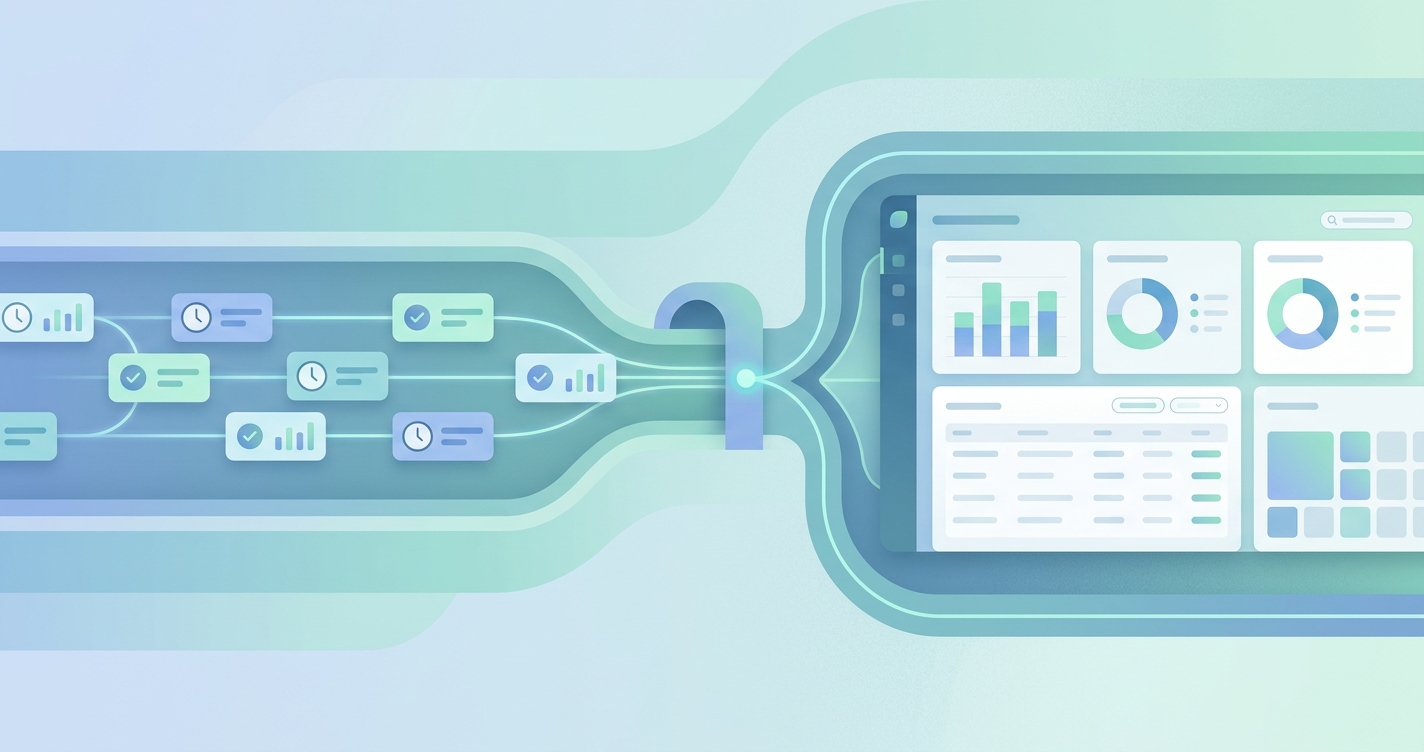
The most significant operational vulnerability in modern telehealth infrastructure is not hardware failure or patient non-compliance; it is the inability to systematically track and monetize clinical effort. Health IT teams and telehealth operations leaders often expend considerable resources deploying sophisticated monitoring devices, only to discover that their clinical staff's time vanishes into fragmented, poorly documented electronic health record notes. Deploying the right CMS RPM reimbursement technology is the only structural mechanism to ensure that every interactive minute, device setup, and physiological data transmission translates into compliant, realizable revenue. Without automated capture systems, health organizations routinely forfeit a substantial percentage of their earned reimbursement, essentially providing complex chronic care management at a financial loss. The operational integrity of a remote care program relies entirely on its ability to align physiological data routing with exact billing specifications.
"Primary care practices adopting remote patient monitoring experienced a 20% increase in Medicare revenue over a two-year period, with the vast majority of this growth attributed directly to RPM billing rather than secondary visits."
- Mitchell Tang, PhD, Assistant Professor of Health Policy and Management, Columbia University Mailman School of Public Health (2024)
The economics of missed minutes in remote monitoring
The financial viability of a remote care initiative depends entirely on translating clinical activity into highly specific billing codes. While physicians and care managers review clinical dashboards, conduct patient outreach, and adjust medication regimens based on home vitals, manual RPM time tracking software frequently fails to capture these dispersed micro-interactions. Health IT directors face the structural challenge of integrating RPM billing automation directly into the clinician's native EHR workflow, removing the reliance on human memory and manual entry.
When clinical staff must manually log their minutes or access isolated third-party web portals to verify device transmission days, revenue leakage becomes inevitable. Capturing billable monitoring time requires a system that natively understands the criteria for CPT 99453, 99454, 99457, and 99458. It must passively aggregate this data without adding administrative friction to the clinical encounter. The sheer volume of unbilled revenue in the industry, often estimated by revenue cycle analysts to be a third of all eligible RPM activity, stems from a fundamental disconnect between the care delivery mechanism and the financial tracking mechanism.
| Operational Function | Manual RPM Workflow | Automated CMS RPM Reimbursement Technology |
|---|---|---|
| Transmission Tracking (CPT 99454) | Staff manually audits patient compliance in separate vendor portals | System automatically flags patients hitting the 16-day transmission threshold |
| Time Aggregation (CPT 99457) | Clinicians retrospectively log minutes in generic EHR flowsheets | Software passively aggregates time spent in RPM modules and patient messaging |
| Add-On Billing (CPT 99458) | Frequently missed due to complex manual time calculations across weeks | Automatically triggers claims when 40, 60, or 80+ minute thresholds are reached |
| Audit Readiness and Compliance | High risk of fragmented documentation and OIG scrutiny | Centralized, timestamped HL7 FHIR data payloads proving clinical interaction |
Common leakage points in traditional, disconnected workflows include:
- Failing to document the initial device setup and patient education comprehensively to satisfy CPT 99453.
- Missing the strict 16-day data transmission threshold required for monthly device supply billing (CPT 99454) due to undetected device offline status.
- Losing track of cumulative 20-minute clinical staff time (CPT 99457) when interactions are spread across multiple short phone calls and chart reviews.
- Completely omitting the additional 20-minute increments (CPT 99458) because the manual calculation process is too burdensome for care managers at the end of the month.
Operational workflows and EHR integration
To maximize compliant revenue, health systems must transition from deploying standalone devices to architecting integrated data pipelines. The objective is to plug into existing EHR and telehealth workflows using standard protocols, specifically ensuring that HL7 FHIR compatible RPM data carries both clinical and billing metadata.
Automating the 16-day transmission rule
CPT 99454 requires patients to transmit data for at least 16 days in a 30-day period. Relying on clinical staff to audit patient compliance is an inefficient use of resources and highly prone to error. Advanced infrastructure monitors the inbound data stream continuously, applying logic gates to verify that a reading qualifies as a unique daily transmission. These systems automatically generate notifications for patients at risk of falling short of the threshold and automatically push a billing event to the EHR clearinghouse once the 16th transmission is verified.
Aggregating clinical interactive minutes
CPT 99457 and 99458 demand precise tracking of the time clinical staff spend monitoring data and communicating with the patient or caregiver. Modern technology tracks this time at the user-interface level. When a nurse opens an RPM dashboard within the EHR to review a patient's vital signs or initiates a secure message based on a clinical alert, the system logs the session duration. This time is aggregated cumulatively across the calendar month. The system ensures that health systems capture every billable monitoring time interval without requiring nurses to watch a clock or estimate their involvement.
Reconciling device setup and patient education
CPT code 99453 covers the initial setup and patient education for the remote monitoring device. While this is a one-time billing code per episode of care, it is frequently missed during the chaotic onboarding phase of a new telehealth initiative. RPM billing automation systems track the exact timestamp when a device is registered to a patient profile and paired with the network. By capturing this digital handshake and linking it to the patient's electronic consent forms, health IT platforms automatically generate the documentation necessary to validate the setup phase, ensuring that the initial investment in patient onboarding is reliably reimbursed.
Structuring data for the revenue cycle
For EHR integration teams, the structural challenge is mapping these interactions to standardized formats. Utilizing HL7 FHIR Observation and Encounter resources allows the health system to wrap raw vital signs in contextual metadata. This metadata proves who recorded the data, when it was transmitted, and how much clinical time was spent reviewing it. When the data payload arrives at the revenue cycle management system, it already contains the necessary parameters to survive payer scrutiny.
Current research and evidence
The financial impact of optimized billing workflows is measurable and validated by academic research. A 2024 study led by Mitchell Tang, PhD, at the Columbia University Mailman School of Public Health analyzed national Medicare claims data from 754 primary care practices. The research found that practices adopting remote monitoring achieved a 20% increase in Medicare revenue over two years. Crucially, the researchers noted that this growth was driven primarily by direct RPM billing, confirming that when systems are properly configured to capture the correct codes, the financial returns are highly significant and do not require sacrificing standard evaluation and management volume.
However, this financial opportunity carries regulatory obligations. The Department of Health and Human Services Office of Inspector General (OIG) has issued reports scrutinizing Medicare RPM billing practices. The OIG noted that the rapid expansion in remote monitoring utilization necessitates stricter adherence to documentation requirements. The agency identified patterns of billing errors, often stemming from fragmented technology stacks that fail to clearly link clinical time with specific patient interactions. This regulatory environment makes robust, automated documentation an absolute operational requirement rather than an optional feature.
The Future of CMS RPM Reimbursement Technology
As health systems prepare for CMS RPM requirements 2026, the strategic focus is shifting from basic device connectivity to comprehensive workflow automation. Future iterations of reimbursement technology will rely heavily on strict interoperability standards and automated compliance algorithms. Health IT teams are prioritizing platforms that translate vendor-specific device metrics into standardized HL7 FHIR resources, seamlessly passing both the clinical value and the interaction metadata directly into the EHR's billing engine.
The evolution of RPM time tracking software will eventually eliminate the need for manual code entry entirely. By linking device data pipelines directly to clearinghouses and EHR billing modules, organizations can achieve continuous, error-free revenue capture. The emphasis in 2026 and beyond will be on proving clinical necessity and interaction quality, requiring technology that securely logs exactly what actions a clinician took in response to a transmitted remote vital sign.
Frequently asked questions
How does RPM time tracking software prevent billing audits? Automated time tracking creates a precise, timestamped digital trail of every clinical interaction and data transmission. By replacing manual estimates with objective system logs, health systems can easily provide the necessary documentation to defend against Medicare or OIG audits, proving exact interaction durations.
What is the most common reason for denied CPT 99454 claims? The most frequent cause for denial is failing to meet the strict requirement of 16 separate days of data transmission within a 30-day billing cycle. Poor technology integration often results in delayed or batched data syncing, which payers may interpret as a failure to meet the daily transmission mandate.
Can HL7 FHIR integration automate RPM billing workflows? Yes. By mapping remote vital signs and system interactions to specific FHIR resources, health IT teams can feed structured, standardized data directly into the EHR. This allows native clinical decision support and billing modules to automatically calculate accumulated time and trigger billing codes without manual human intervention.
Circadify is actively addressing this space, providing the infrastructure needed to seamlessly plug into existing EHR and telehealth workflows. For health IT directors and EHR integration teams tasked with eliminating revenue leakage, modernizing your data architecture is the primary step. By ensuring HL7 FHIR compatible RPM data flows directly into your billing systems, you can capture every billable minute with complete compliance and operational efficiency. Explore our integration documentation and deployment guides at circadify.com/solutions/telehealth.