How to Switch RPM Vendors Without Losing Patient Data
A technical guide for Health IT directors on executing an RPM vendor migration, preserving patient history, billing continuity, and HL7 FHIR EHR workflows.
The operational integrity of remote care infrastructure relies heavily on uninterrupted data continuity. When health systems outgrow their existing remote patient monitoring systems due to integration bottlenecks or scaling limitations, IT directors face a highly sensitive architectural challenge. Executing an RPM vendor migration without dropping active patient telemetry, severing billing cycles, or losing historical baseline data requires rigorous technical planning. Moving physiological data between proprietary platforms involves far more than simply exporting and importing static databases. It demands a structured integration strategy that preserves longitudinal clinical records, sustains patient device connectivity, and maps seamlessly to the electronic health record (EHR). For clinical engineering teams, standardizing this transition is the difference between a seamless infrastructure upgrade and a catastrophic loss of clinical visibility.
"The transition from one electronic health record or monitoring system to another presents significant challenges, where the failure to maintain historical patient records directly compromises clinical decision-making and patient safety." Source: Research on Health Data Interoperability Standards, National Center for Biotechnology Information (NCBI), 2023.
Navigating an RPM vendor migration strategy
Initiating an RPM vendor migration is typically driven by a need for better EHR integration, enhanced data security, or reduced IT administrative burden. According to a 2023 HIMSS Analytics report on healthcare infrastructure, nearly 80 percent of healthcare organizations are actively migrating core services to cloud-based or modernized environments to improve interoperability. In the context of remote monitoring, this transition is complicated by the continuous nature of the data being generated. Patients at home are taking blood pressure readings, measuring blood glucose, and recording oxygen saturation daily. A migration cannot mandate a pause in patient monitoring.
The primary technical hurdle in switching platforms is overcoming vendor lock-in. Legacy platforms often utilize proprietary data schemas, making extraction difficult. When physiological data is exported, it frequently arrives in unstructured formats that lack the necessary metadata, such as the exact device identifier, the clinical context of the reading, or the patient's unique medical record number (MRN). If the new system cannot parse this unstructured export, the patient's historical baseline is lost, and clinicians are forced to start their trending analysis from scratch.
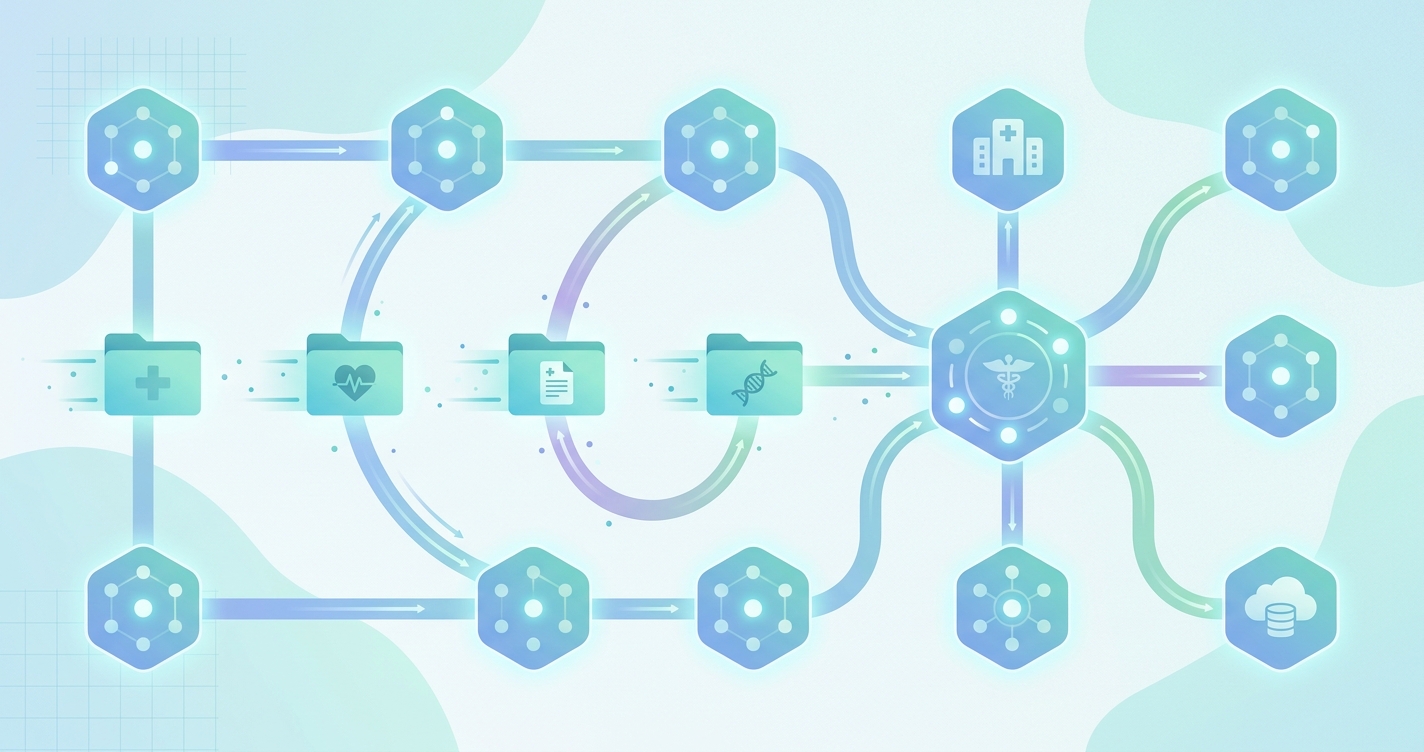
Modern migration strategies rely on API-driven data extraction rather than flat-file transfers. By using standardized interfaces, health IT teams can execute parallel runs, where both the legacy system and the incoming platform receive and route data simultaneously during a predetermined transition window. This parallel architectural approach ensures that active monitoring alerts are never missed while the historical database is mapped, validated, and fully ingested into the new environment.
Rpm data migration architectures compared
Evaluating the technical pathway for transferring patient-generated health data (PGHD) requires comparing legacy transition methods against modern interoperability frameworks.
| Architecture Type | Data Standardization | Real-Time Sync Capability | Risk of Data Loss | IT Resource Load |
|---|---|---|---|---|
| CSV / Flat-File Export | None (Proprietary Schema) | No (Batch only) | High | Heavy (Manual mapping) |
| HL7 v2 Point-to-Point | Moderate (Message-based) | Yes (Event-driven) | Medium | Moderate (Interface engine setup) |
| HL7 FHIR REST API | High (Standardized Resources) | Yes (Continuous) | Low | Light (Native EHR compatibility) |
Core pillars of data continuity
A successful vendor transition requires health IT teams to construct a migration plan that isolates and protects specific operational components. Integrating disparate data formats requires attention to the following functional requirements:
- Historical Baseline Preservation: Clinicians require a continuous view of physiological trends. Migration scripts must accurately map legacy data fields to the new database architecture to ensure continuous graphical trending inside the EHR.
- Identity Resolution and MRN Matching: Patient-generated health data must be accurately attributed. The migration protocol must securely match legacy patient identifiers with the master patient index (MPI) to prevent orphaned data.
- Device Assignment Continuity: Patients should not have to return or re-pair their hardware unless the transition also involves a hardware replacement. The new platform must seamlessly assume the management of existing MAC addresses and cellular device identifiers.
- Billing Timer Persistence: Remote monitoring reimbursement relies on strict tracking of monitoring days (e.g., the 16-day requirement for specific CMS CPT codes). The transition must preserve these billing timers so that a patient migrating on day 10 of their cycle does not lose their accumulated monitoring days.
Industry applications for standardized transitions
The technical requirements for data migration vary significantly depending on the clinical application. Different medical specialties rely on distinct data structures and require tailored data mapping protocols.
Cardiology and high-acuity monitoring
For cardiology departments monitoring continuous telemetry, weight fluctuations for heart failure, or blood pressure variations, data latency and completeness are non-negotiable. Migrating these programs requires transferring complex datasets that often include high-frequency readings and specific device error codes. A failure to migrate historical data in this specialty means cardiologists lose sight of the subtle physiological shifts that precede acute exacerbations, increasing the risk of preventable readmissions.
Chronic disease management
Programs managing diabetes, hypertension, and chronic obstructive pulmonary disease (COPD) rely heavily on longitudinal trend analysis. In chronic care, a single reading is rarely actionable; clinical decisions are made based on 30-day or 90-day averages. When health systems transition platforms for chronic care, the primary focus is ensuring that the Observation resources within the new platform perfectly reflect the historical database, allowing risk-stratification algorithms to continue functioning without interruption.
Post-acute surgical care
Post-acute monitoring programs are typically short-term but highly sensitive. Patients recovering from surgery are monitored for rapid changes in temperature, heart rate, or oxygen saturation. If an IT department executes a transition while a cohort of post-acute patients is actively monitored, the architecture must ensure zero downtime. Interface engines must be configured to prioritize real-time alert routing to clinical decision support systems during the cutover phase.
Current research and evidence
The shift away from siloed legacy systems toward interoperable infrastructure is heavily supported by recent industry research. In the 2023 Telehealth and RPM Ecosystem report published by KLAS Research, analysts noted a massive wave of energy and investment in the remote monitoring sector, heavily driven by the necessity for improved electronic medical record integration. Health systems are increasingly abandoning vendors that cannot provide native, bi-directional data flow into their primary clinical workflows.
Furthermore, academic research emphasizes the necessity of standardizing device data during these transitions. A 2023 study published in the journal MDPI focused on an HL7 FHIR-Based Open-Source Framework for Real-Time Biomedical Signal Acquisition and IoMT Interoperability. The researchers demonstrated that utilizing the Fast Healthcare Interoperability Resources (FHIR) standard mitigates the risks associated with fragmented, proprietary environments. By converting legacy telemetry data into standardized FHIR resources, specifically Observation, Device, and Patient resources, health systems can successfully migrate vast amounts of physiological data between disparate platforms while retaining complete clinical context and analytical utility.
The future of RPM platform transitions
As the digital health sector matures, the complexity of migrating between vendors is expected to decrease, driven entirely by regulatory pressures and the universal adoption of standardized APIs. The enforcement of the 21st Century Cures Act and mandates like CMS-0057-F impose strict penalties for information blocking, effectively forcing legacy vendors to dismantle proprietary data silos.
The future of these transitions relies heavily on the SMART on FHIR framework. Rather than building custom middleware to translate flat files from an old vendor to a new one, health IT teams will increasingly rely on OAuth 2.0 and FHIR endpoints to securely authenticate and port entire patient registries in real time. This evolution will transform RPM transitions from high-risk, multi-month IT projects into streamlined architectural updates, enabling health systems to remain agile and select the best monitoring infrastructure without the fear of vendor lock-in.
Frequently asked questions
How do you migrate active RPM billing cycles between vendors? Maintaining billing continuity requires extracting the precise start date of the monitoring period, the number of successful data transmission days, and the accrued clinical review time from the legacy system. This data is mapped into the new platform's billing module to ensure that the 16-day CMS transmission requirements and 20-minute clinical review thresholds are seamlessly continued, preventing missed reimbursement cycles.
What is the role of HL7 FHIR in vendor transitions? HL7 FHIR provides a standardized data model for healthcare information. During a transition, FHIR allows IT teams to map proprietary legacy data into universal formats (like the Observation resource for vital signs). This ensures that the new platform and the central EHR can immediately parse and display the historical data without requiring custom translation software.
How long does a typical RPM data migration take? The timeline depends heavily on the volume of historical data and the interoperability capabilities of both the old and new vendors. If both systems support FHIR APIs, a migration can be executed and validated in a few weeks. However, if the legacy system only provides unstructured flat-file exports, the data cleansing, mapping, and validation process can take several months.
Can patients keep their existing hardware when a health system changes software platforms? Often, yes. If the incoming software platform operates via a Bring Your Own Device (BYOD) model or supports open device integration via cellular APIs, existing hardware can be securely redirected to the new platform's servers. This prevents the logistical nightmare of shipping new hardware to thousands of patients.
For health IT directors preparing for an RPM vendor migration, establishing a standardized data pipeline is the first operational step. Circadify is addressing this space by providing infrastructure that natively aligns with modern interoperability standards, ensuring clinical data flows seamlessly during platform transitions. To explore integration architecture and implementation resources, review our EHR integration guides.