RPM vs CCM: How the Programs and Technology Differ
A technical analysis of the workflow, staffing, and technology differences between RPM and CCM for Health IT directors integrating remote care.
The rapid maturation of digital health infrastructure has forced health systems to formalize how they manage patient populations outside the clinic walls. For Health IT directors and EHR integration teams, evaluating RPM vs CCM is no longer just a billing classification exercise; it is an enterprise architecture decision. Remote patient monitoring (RPM) and chronic care management (CCM) often target overlapping patient demographics, yet they demand entirely different data pipelines, staffing allocations, and API strategies. While clinical teams focus on patient outcomes, IT departments must build the infrastructure to support both continuous physiological data streams and episodic care coordination workflows. As organizations scale these programs, understanding the structural differences between them becomes critical for preventing redundant technology investments and fragmented provider dashboards.
"The structural divide between remote monitoring and care management is narrowing at the technology layer. Recent CMS data reflects this convergence, with over 6.7 million CCM claims and 2 million RPM claims processed in a single year, forcing health systems to consolidate their interoperability strategies."
- CMS Health Analytics, Centers for Medicare & Medicaid Services, 2024
Core Operational Differences: RPM vs CCM
When evaluating remote patient monitoring vs chronic care management, the most significant divergence occurs at the data ingestion layer. RPM is inherently a device-driven, physiological data stream. It requires a technology stack capable of handling high-frequency, low-latency transmissions from peripheral hardware like blood pressure cuffs, glucometers, and weight scales. The system must capture raw vital signs, normalize the telemetry, and push it into the electronic health record (EHR) in near real-time. For an IT department, this means managing device connectivity, cellular data networks, Bluetooth pairing protocols, and API endpoint reliability.
Conversely, CCM is a relationship-driven, narrative data stream. The technology infrastructure required for CCM focuses heavily on workflow orchestration, task management, and communication logging. Rather than processing continuous vital signs, a CCM platform must track clinical time spent on care coordination activities, such as medication reconciliation, specialist referrals, and patient education. The data generated is episodic and subjective, requiring robust time-tracking engines that can accurately attribute minutes to specific billing codes.
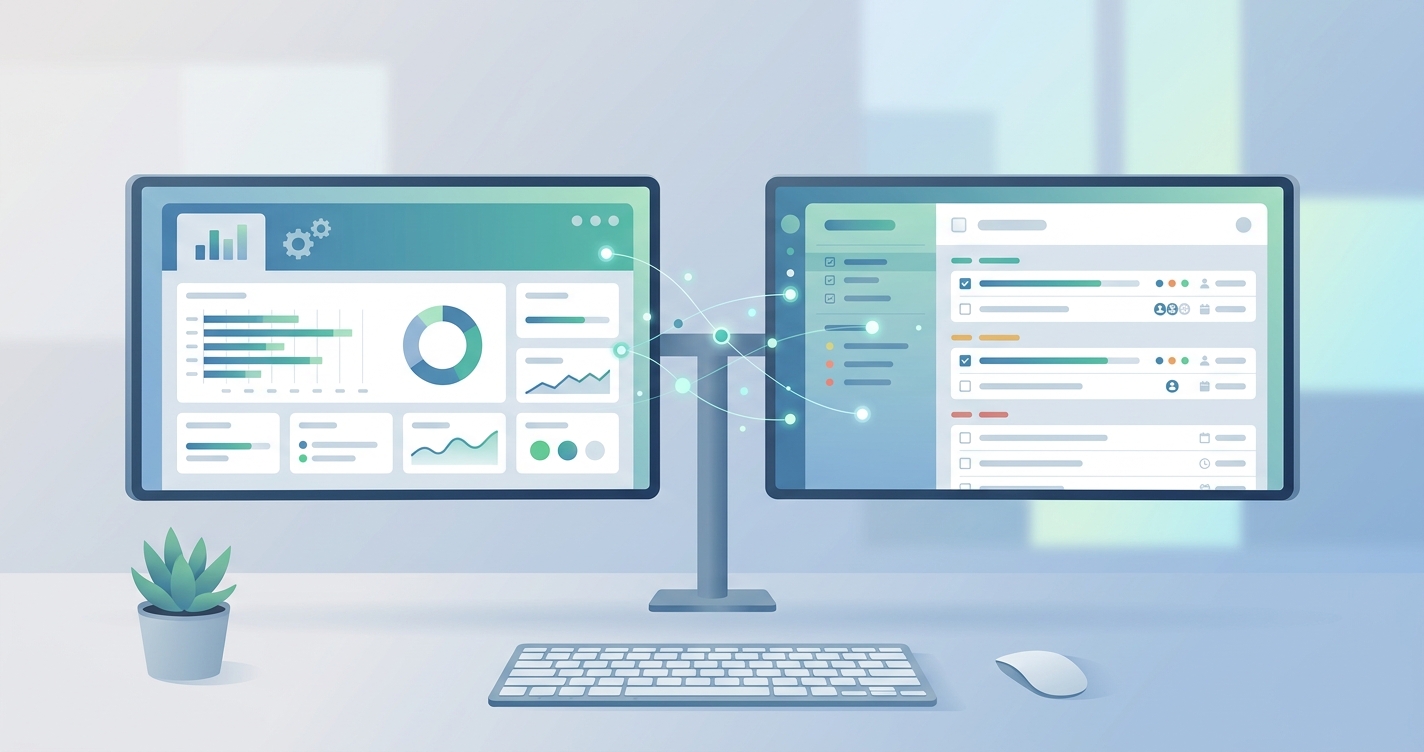
Combining RPM and CCM within a single health system often exposes friction points if the underlying architecture relies on disparate point solutions. IT directors are frequently tasked with merging the objective data of RPM with the subjective workflows of CCM into a unified provider view. This requires a sophisticated RPM technology stack that can intelligently route alerts based on physiological thresholds while simultaneously logging the care manager's time spent addressing those alerts. The goal is a synchronized clinical interface where an abnormal blood pressure reading automatically triggers a care coordination task, natively tracking the intervention for both clinical audit and reimbursement purposes.
| Feature | Remote Patient Monitoring (RPM) | Chronic Care Management (CCM) |
|---|---|---|
| Primary Data Type | Objective physiological vital signs | Subjective care coordination and education |
| Technology Stack Focus | Device API integration, data normalization | Task management, communication tracking |
| Clinical Workflow | High-frequency data review and triage | Scheduled monthly outreach and planning |
| Staffing Model | Technicians for setup, nurses for alerts | Care managers, social workers, pharmacists |
| Billing Mechanism | Device supply and vital sign monitoring time | Time spent on non-face-to-face coordination |
When health systems evaluate their infrastructure requirements for remote care programs, the technical priorities generally fall into these distinct categories:
- Device connectivity and latency management for continuous real-time vital sign transmission.
- Alert fatigue filtering and clinical decision support routing for abnormal readings.
- Time-tracking engines capable of differentiating between physiological monitoring and general care coordination.
- FHIR resource mapping for both high-frequency observations and episodic care plan documentation.
- Automated compliance safeguards to prevent double-billing across overlapping program requirements.
Industry applications for connected care
Workflow integration and billing automation
A major challenge for telehealth operations involves resolving RPM CCM billing differences at the application layer. CMS permits concurrent billing for both programs, provided the time is completely distinct. From a software perspective, this requires an audit trail that explicitly separates a clinician's time reviewing a dashboard of RPM data from the time spent calling the patient to discuss their broader CCM care plan. IT teams must deploy systems that feature strict session tagging. If a nurse opens a patient record due to a high heart rate alert, the platform must categorize that interaction correctly, applying the minutes to the appropriate code bucket without manual data entry from the clinician.
Managing FHIR interoperability
The integration of these programs into enterprise EHRs relies heavily on HL7 FHIR standards, but the resources utilized differ significantly. For RPM vital signs data, the architecture depends on the "Observation" and "Device" resources to map discrete physiological measurements directly into flowsheets. This ensures a physician sees the remote blood pressure readings in the same interface as in-clinic measurements. CCM integration, however, relies on "CarePlan", "Goal", and "Communication" resources to update longitudinal narratives and task lists. Building a unified pipeline means configuring an integration engine that can translate both structured telemetry and unstructured clinical notes into the correct FHIR format before transmitting them to the EHR.
Staffing and resource allocation
The operational demands of these programs require different clinical interfaces. RPM platforms must be built for exception management. An RPM provider dashboard needs sophisticated filtering algorithms to highlight only the patients exhibiting out-of-bounds metrics, effectively shielding the clinical team from the noise of normal readings. This allows a lean triage staff to manage large patient populations. A CCM interface, by contrast, functions more like a customer relationship management tool. It prioritizes task queues, upcoming outreach deadlines, and comprehensive patient summaries to facilitate deep, scheduled engagements by care managers.
Current research and evidence
The clinical efficacy of unifying continuous monitoring with structured care management is well documented. A 2023 study by Blood AJ, Cannon CP, Gordon WJ, et al., published in JAMA Cardiology, evaluated a remotely delivered hypertension and lipid management program. The researchers utilized an EHR-integrated care model that combined objective physiological monitoring with structured care coordination algorithms. The study demonstrated that integrating continuous data streams into the existing clinical workflow significantly improved disease control metrics without overwhelming the clinical staff.
Further industry analysis highlights that isolated programs often fail to yield sustainable return on investment. When an organization runs separate software for RPM and CCM, the clinical staff experiences application fatigue, logging into multiple portals to piece together a complete patient profile. Research indicates that systems executing combined implementations within a single technology stack experience higher patient adherence rates and more consistent billing compliance. The data suggests that subjective care coordination is far more effective when informed by objective, daily physiological insights. When a care manager conducts their monthly CCM call armed with a 30-day trend of RPM data, the intervention shifts from a generic health check to a highly targeted clinical discussion.
The future of remote and chronic care integration
The trajectory of remote care technology is moving strictly toward consolidation. Health IT directors are actively decommissioning standalone device portals in favor of enterprise-grade platforms capable of supporting the full spectrum of virtual care management. The future of this space will be defined by intelligent automation and predictive analytics.
Next-generation systems will blur the lines between RPM and CCM by using physiological data trends to automatically generate and update care coordination tasks. For example, a system detecting a gradual, three-week increase in a patient's weight and blood pressure will not simply flag an RPM alert; it will automatically draft a CCM intervention plan, schedule a telehealth consultation, and route the appropriate documentation to the primary care provider's EHR inbox. This level of automation will require advanced integration layers and a complete commitment to interoperability standards. Health systems that invest in modular, FHIR-native infrastructure today will be positioned to seamlessly adopt these predictive care models as they become the industry standard.
Frequently asked questions
Can a patient be enrolled in both RPM and CCM concurrently?
Yes. CMS regulations permit concurrent enrollment and billing for both Remote Patient Monitoring and Chronic Care Management. However, the operational challenge for IT teams is ensuring the platform can distinctly track the time spent on each service. The minutes applied to device monitoring cannot be double-counted toward care coordination requirements.
What are the primary HL7 FHIR resources used for these workflows?
An RPM technology stack primarily uses the Observation resource to transmit physiological vital signs and the Device resource to log hardware details. Conversely, CCM integration relies heavily on the CarePlan, Goal, and Communication resources to document ongoing management, patient education, and longitudinal clinical narratives.
How do staffing requirements differ between the two models?
RPM utilizes an exception-based staffing model, where triage nurses or technicians respond asynchronously to physiological alerts generated by the system. CCM requires a relationship-based model, utilizing dedicated care managers, pharmacists, and social workers who conduct scheduled, comprehensive outreach to coordinate long-term treatment strategies.
As health systems move beyond isolated pilot programs, building a unified architecture for both continuous monitoring and care management is a primary operational mandate. Organizations that solve the data routing and time-tracking challenges can support complex patient populations without overloading their clinical staff. Circadify is addressing this space by providing robust infrastructure that normalizes physiological data and integrates cleanly into existing clinical workflows. For technical implementation details and integration strategies, review the documentation at circadify.com/solutions/telehealth.