Will my doctor get my home readings fast enough to help me, even on a weekend?
How home vital signs send readings to doctor systems quickly and reliably, with weekend coverage, FHIR data transfer, and the workflow behind timely remote monitoring.
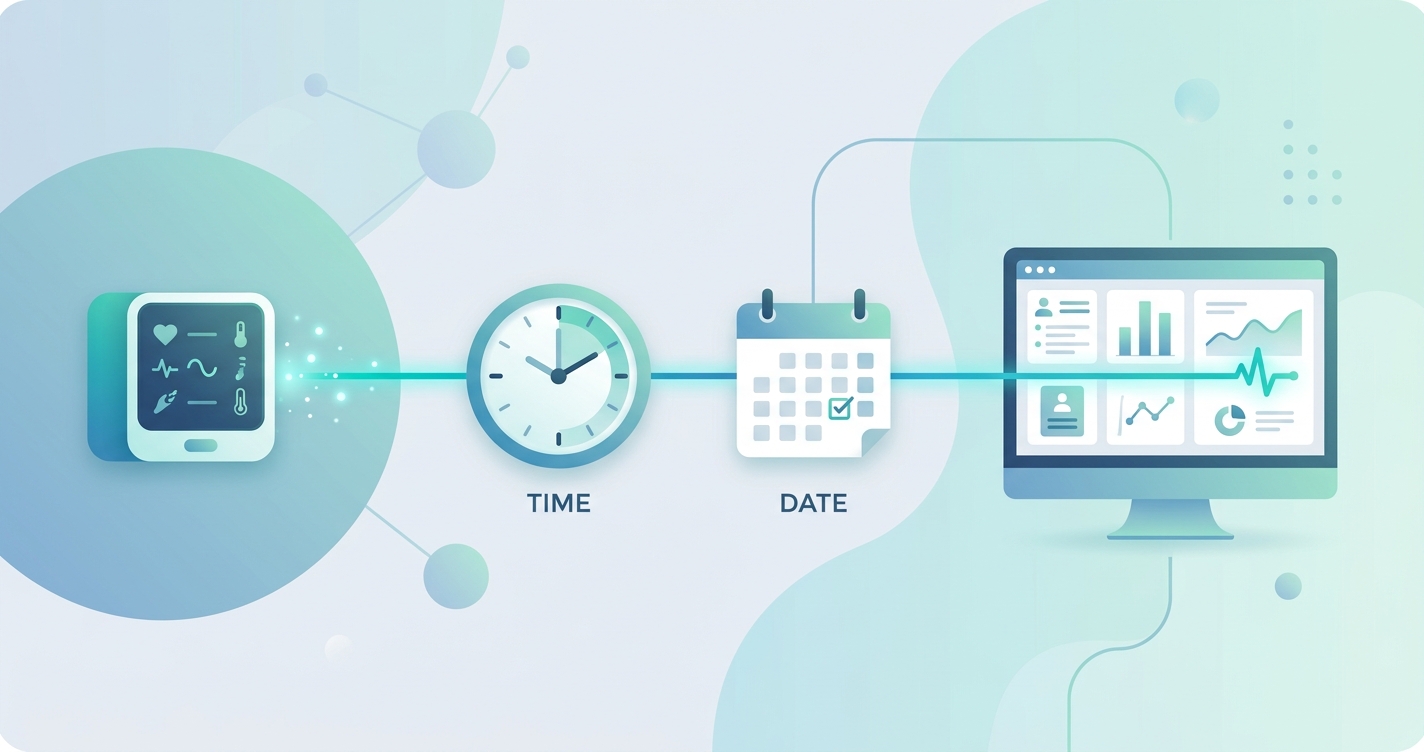
Patients enrolled in remote monitoring tend to ask a deceptively simple question: when I take a reading at home on a Saturday morning, does anyone actually see it before Monday? For the health IT directors, EHR integration teams, and telehealth operations leaders who build these programs, that question maps to a chain of technical and staffing decisions. The ability to send readings to doctor systems quickly is not a single feature. It is the product of device firmware, transport protocols, EHR ingestion pathways, alert logic, and a clinical coverage model that does not clock out at 5 p.m. on Friday. Understanding where time is gained or lost across that chain is what separates an RPM program that reassures patients from one that quietly erodes their trust.
A 2023 real-time remote monitoring and alarming study published in PMC reported alert generation in under two minutes from measurement, with 88.7 percent accuracy in flagging out-of-range readings, demonstrating that the transmission layer is rarely the bottleneck in timely care.
What it really means to send readings to doctor systems on time
When teams evaluate how quickly they can send readings to doctor workflows, they often conflate two distinct measures: data latency and clinical response time. Data latency is the interval between a patient completing a measurement and that value becoming available in the clinical record or monitoring dashboard. Clinical response time is the interval between an abnormal value arriving and a human acting on it. Modern transmission pathways have compressed data latency to seconds or low single-digit minutes. The variable that actually determines weekend safety is the second measure, and it is governed by staffing and escalation design rather than by network speed.
A cellular-enabled device or a smartphone-paired sensor typically pushes a reading to a vendor cloud within seconds of capture. From there, the value is normalized and forwarded to the EHR. The 2023 study by researchers reporting in PMC found that an end-to-end real-time pipeline generated alerts in under two minutes, which means the technical envelope for same-minute awareness already exists. The practical question for operations teams is whether the downstream alert routing and coverage roster are built to consume that speed, or whether a reading sits in a queue that no one checks until the next business day.
The distinction matters because patients experience the slowest link in the chain, not the fastest. A blood pressure value that reaches a FHIR Observation resource in 90 seconds provides no benefit if the escalation rule routes it to an inbox monitored only Monday through Friday. Closing that gap is a workflow problem, and it is solvable with the same interoperability tooling that handles weekday traffic.
Comparing data transfer pathways and their timeliness
Different transfer methods carry different timeliness and reliability profiles. The table below compares common approaches that integration teams weigh when designing how patient readings move from the home into clinical view.
| Transfer pathway | Typical data latency | Weekend reliability | Integration effort | Best fit |
|---|---|---|---|---|
| Cellular device to cloud to FHIR API | Seconds to 2 minutes | High, no patient action required | Moderate | Chronic care at scale |
| Bluetooth device to patient app to cloud | 1 to 5 minutes | Depends on phone and app sync | Moderate | Tech-comfortable cohorts |
| Manual patient entry in portal | Minutes to hours | Low, relies on patient diligence | Low | Backup or low-acuity use |
| Batch upload or daily file feed | 12 to 24 hours | Low for urgent values | Low | Trend review, not alerts |
| Real-time HL7 or FHIR stream to monitoring center | Under 2 minutes | High with 24/7 staffing | High | Higher-acuity programs |
A few patterns stand out from this comparison:
- Pathways that require no patient action after measurement carry the most consistent weekend reliability.
- Batch and manual methods are acceptable for trend analysis but should never be the only route for values that can trigger urgent intervention.
- Real-time streaming pays off only when paired with a coverage model that can act on what arrives.
- The integration effort climbs with timeliness, which is why teams often run a tiered model rather than forcing every reading through the fastest pipe.
Industry applications across telehealth operations
Chronic disease management
For hypertension, heart failure, and diabetes programs, the dominant design uses cellular or app-paired devices that automatically send readings to doctor dashboards without requiring the patient to log in. Because these conditions can deteriorate gradually, most readings feed trend review rather than instant alerts. The exception is a threshold breach, such as a systolic value above a configured ceiling, which should route to an on-call clinician regardless of the day.
Hospital-at-home and post-acute care
Higher-acuity programs increasingly rely on real-time streaming into a centralized monitoring center staffed around the clock. Here the weekend question is moot by design, because the coverage model already assumes continuous attention. The 2024 trend reporting from Health Recovery Solutions noted a shift toward continuous monitoring for high-acuity patients, which makes the transport speed and the 24/7 roster equally load-bearing.
Primary and specialty ambulatory care
Smaller practices often cannot staff a 24/7 monitoring desk. The pragmatic pattern is a hybrid: automated transmission keeps the data current, while an after-hours triage service or a shared on-call rotation handles the narrow set of values that cannot wait. This preserves timeliness for true emergencies without obligating a small team to monitor screens all weekend.
Current research and evidence
The evidence base supports a clear conclusion: transport is fast, and the safety margin lives in workflow design. The 2023 PMC study on real-time monitoring and alarming demonstrated sub-two-minute alert generation, confirming that the technical pipeline can keep pace with clinical urgency. Industry analyses from 2024, including reporting summarized by Medical Economics and Health Recovery Solutions, point to continuous monitoring and tighter EHR integration as the prevailing direction, with FHIR-based exchange standardizing how vital signs land in systems such as Epic and Cerner.
Operational best practices documented across RPM implementation guidance reinforce the same theme. Programs are advised to configure automated alerts for missing data within 24 hours and to initiate outreach after two consecutive missed days. These rules exist precisely because the failure mode is rarely a slow network. It is a gap in monitoring or a device that stopped transmitting, as noted in operational guidance from CandiHealth on device failures. The market context underlines the stakes: the global RPM market, estimated near 14 billion dollars in 2023, is projected to reach 41.7 billion by 2028, which means more patients depending on these pathways every quarter.
FHIR plays a specific role in this reliability story. By mapping each reading to a structured Observation resource with consistent coding, FHIR lets a value flow into the same clinical view and the same alert engine whether it arrives on a Tuesday or a Sunday. Standardization removes the manual reconciliation step that historically introduced weekend delay.
The future of timely home reading delivery
Three developments are likely to shape how quickly programs send readings to doctor systems over the next several years. First, continuous and passive capture will reduce dependence on patient-initiated measurement, smoothing out the weekend dip in data volume. Second, smarter alert filtering, layered on clinical decision support, will let teams route only actionable values to scarce after-hours staff, making 24/7 awareness affordable for smaller organizations. Third, deeper FHIR-native integration will shrink the custom middleware that currently sits between device clouds and the EHR, removing both latency and points of failure.
The trajectory points toward a model where the calendar day becomes irrelevant to data flow. The remaining work for integration teams is to align coverage and escalation logic with transport capabilities that already operate in near real time, so the patient asking about Saturday morning can be told, accurately, that the system does not take weekends off.
Frequently asked questions
How fast does a home reading actually reach my care team?
With a cellular or app-connected device, a reading typically reaches the vendor cloud within seconds and the clinical record within minutes. Research has shown alert generation in under two minutes, so the technical delivery is fast. What varies is how quickly a human reviews non-urgent values.
Will an abnormal weekend reading get a response?
That depends on the program's escalation design, not the network. Well-built programs route threshold breaches to an on-call clinician or a 24/7 monitoring service so urgent values are seen regardless of the day, while routine readings wait for the next review cycle.
Does manual entry slow things down?
Manual portal entry is the slowest reliable method because it depends on the patient logging in. It works as a backup or for low-acuity trend tracking, but urgent values should travel through an automated, no-action pathway.
Why does FHIR matter for timely delivery?
FHIR standardizes each reading as a structured Observation resource, so values land in the same dashboard and alert engine every time. That consistency removes manual reconciliation steps that previously caused delays, especially outside business hours.
Circadify is addressing this space with HL7 FHIR-compatible RPM data that plugs into existing EHR and telehealth workflows, so timely delivery does not require rebuilding your stack. Integration teams can review the integration documentation and EHR guides at circadify.com/solutions/telehealth to see how home readings move into clinical view, weekends included.