What happens to my vitals after I scan them at home?
An overview of the RPM data path from patient scan to EHR chart, detailing the technical standards and integration points for health IT and telehealth operations teams.
From a patient's perspective, the process is simple: use a device, take a reading, and trust it reaches their care team. For health IT and telehealth operations leaders, however, this simple action initiates a complex and critical data workflow. Understanding the answer to, "where do home vitals go after scan?" is fundamental to designing, implementing, and scaling effective remote patient monitoring (RPM) programs. The journey of this data from a patient's home to their electronic health record (EHR) is a multi-stage process governed by technical standards, security protocols, and integration logic that defines the operational success of modern virtual care.
"Deep EMR integration is the most common need cited by both experienced and inexperienced organizations...Providers want to have all relevant patient data in one place for clinical decision-making, and they want to avoid the extra work and potential errors that come with swivel-chair workflows."
- KLAS Research, Remote Patient Monitoring 2023
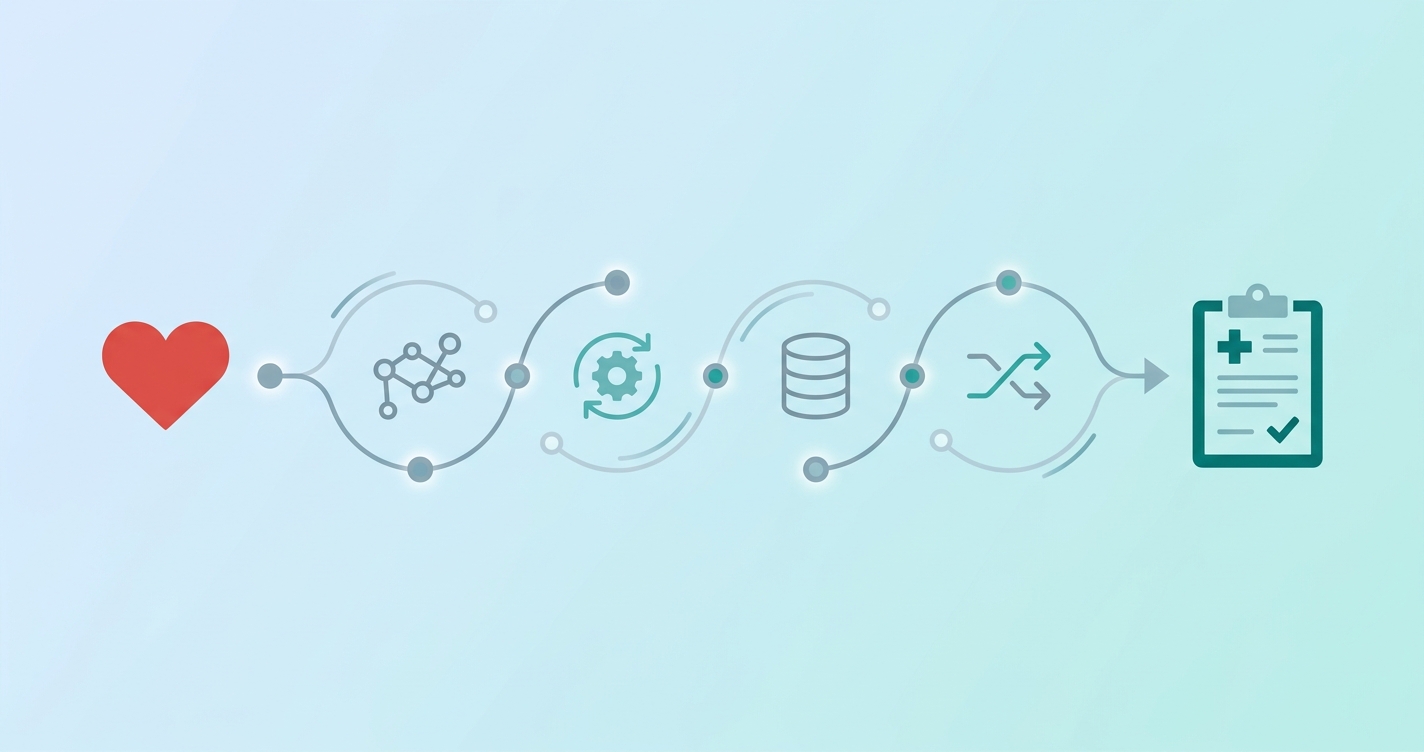
The RPM data path: where do home vitals go after scan?
The journey of a single vital sign reading from a patient's home into a clinician's workflow inside the EHR is a sophisticated data relay race. Each handoff must be secure, standardized, and swift. For health IT teams, managing this pathway is the core of a successful RPM implementation.
- Capture at the Edge: The process begins with the patient. They use an RPM device-a blood pressure cuff, a pulse oximeter, a weight scale, or even a software-based camera scan technology-to capture a physiological measurement.
- Device-to-Gateway Transmission: The captured data is immediately sent from the device to a local gateway. This is typically a patient's smartphone app or a dedicated cellular hub. The transmission at this stage usually occurs over Bluetooth Low Energy (BLE).
- Gateway to RPM Cloud Platform: The gateway application securely transmits the data, via the internet, to the RPM vendor's cloud platform. This transmission must be encrypted, typically using Transport Layer Security (TLS 1.2 or higher), to ensure HIPAA compliance for data in transit.
- Processing and Standardization: Within the vendor's secure cloud, the raw data is processed. It is authenticated, associated with the correct patient account, and transformed into a standardized format. This is a critical step where the data is mapped to clinical coding systems and prepared for EHR consumption.
- Integration with Health System: The standardized data is then forwarded from the RPM platform to the health system's EHR. This is the most complex step, involving integration engines and APIs. Modern systems use HL7 FHIR (Fast Healthcare Interoperability Resources) APIs to post the data directly to the EHR's data repository.
- Ingestion into the EHR: The incoming data, now in a format the EHR understands, populates the patient's chart. It typically appears in a flowsheet, allowing clinicians to view trendlines and historical data alongside other clinical information. If the reading is outside of preset parameters, this step can also trigger automated alerts or tasks for the clinical team.
Rpm data integration methods compared
Choosing the right integration method is a critical decision for any health IT team implementing an RPM program. The choice impacts scalability, workflow efficiency, and total cost of ownership.
| Feature | Direct API Integration (Non-Standard) | HL7 FHIR Integration | Manual/File-Based Transfer |
|---|---|---|---|
| Data Structure | Proprietary, vendor-specific JSON/XML | Standardized (FHIR Observation Resource) | Unstructured (CSV, PDF) |
| Data Flow | Often near real-time, but bespoke | Near real-time, event-driven (RESTful) | Batch processing, high latency |
| Scalability | Low to Medium; requires custom development per system | High; based on a universal standard | Very Low; labor-intensive |
| Clinical Workflow | Often requires a separate dashboard or login | Integrated directly into EHR flowsheets | Manual data entry required; "swivel chair" workflow |
| Interoperability | Poor; locked into a single vendor's format | Excellent; supported by all major EHRs | None; data is not computable |
Industry applications of a standardized data path
A well-architected RPM data workflow using standards like HL7 FHIR does more than just move numbers; it enables core clinical and administrative functions.
Automating clinical workflows
When vitals data arrives in the EHR as discrete, structured information, it becomes "active." It can be used to automatically trigger clinical decision support (CDS) rules. For example, a series of high blood pressure readings can automatically add a patient to a care manager's follow-up list, schedule a telehealth visit, or trigger an alert for medication review, all without manual intervention.
Fulfilling CMS reimbursement requirements
Automated and reliable data flow is essential for documenting RPM services for CMS billing. The data path provides auditable proof that data was collected and monitored, which is necessary for CPT codes like 99454 (data transmission) and 99457 (monitoring and management). A system that automatically logs each data point in the EHR reduces administrative burden and ensures compliance.
Powering population health analytics
Aggregated RPM data from thousands of patients is a powerful resource for population health management. When the data is standardized via FHIR, it can be easily queried and analyzed. Health systems can identify trends, stratify patients by risk level, and measure the effectiveness of interventions across entire patient populations, moving from reactive to proactive care.
Current research and evidence
The industry's shift towards interoperability is not just a trend; it is a mandate driven by evidence and regulation. The 21st Century Cures Act requires that patients have access to their electronic health information, a requirement that has accelerated the adoption of FHIR APIs. Research from organizations like Firely, a key player in the FHIR community, shows rapid growth in adoption. A 2024 survey noted that the maturity of FHIR implementation is increasing globally as health systems move from initial testing to widespread production use.
Furthermore, the technical standards for securing this data are well-established. HIPAA's Security Rule requires technical safeguards, including encryption for data in transit and at rest. Modern RPM platforms achieve this using industry-standard protocols like TLS 1.2+ and AES-256 encryption, ensuring that patient data is protected throughout its journey from the home to the EHR.
The Future of the RPM Data Path
The path that home vitals take after a scan is evolving. The future lies in even tighter integration and more intelligent processing. The rise of SMART on FHIR applications allows third-party services to plug directly into the EHR, running within the clinician's existing workflow. This could enable real-time visualization of vital signs during a telehealth visit or AI-powered analysis of trends directly within the patient chart.
The data path will become faster and more event-driven, moving beyond simple data ingestion to enable complex, bi-directional workflows where the EHR and the RPM platform communicate in real-time to adjust care plans, update patient instructions, and deliver a more responsive care experience.
Frequently asked questions
-
Is my data secure during this process? Yes. The entire data journey is governed by HIPAA security rules. Data is encrypted in transit (typically using standards like TLS 1.2+) and at rest in the cloud (using encryption like AES-256). Access is restricted and auditable, ensuring ePHI is protected at every step.
-
How quickly does my doctor see the reading after a scan? The latency depends on the system architecture. Modern, API-driven RPM platforms can transmit data to the EHR in near-real-time, usually within seconds to a few minutes. This is a significant improvement over older, file-based methods that involved manual uploads and batch processing.
-
What is HL7 FHIR and why does it matter for my vitals? HL7 FHIR (Fast Healthcare Interoperability Resources) is a universal data standard for exchanging healthcare information electronically. For your vitals, it acts like a universal translator, ensuring the data from a home device is structured in a way that any certified EHR system can immediately recognize, understand, and use. This eliminates errors and makes the entire process more reliable.
For health IT leaders and telehealth operations teams, managing this data path is the core operational challenge of modern remote care. Ensuring the secure, reliable, and standardized flow of information from patient to provider is critical. Circadify is focused on solving these integration challenges. To learn more about our FHIR-native approach to RPM data, explore our integration guides and technical documentation at circadify.com/solutions/telehealth.