
What Is SMART on FHIR? RPM App Integration for EHR Platforms
A research-style analysis of how the SMART on FHIR standard enables seamless and secure integration of Remote Patient Monitoring (RPM) applications with existing EHR platforms, streamlining clinical workflows.
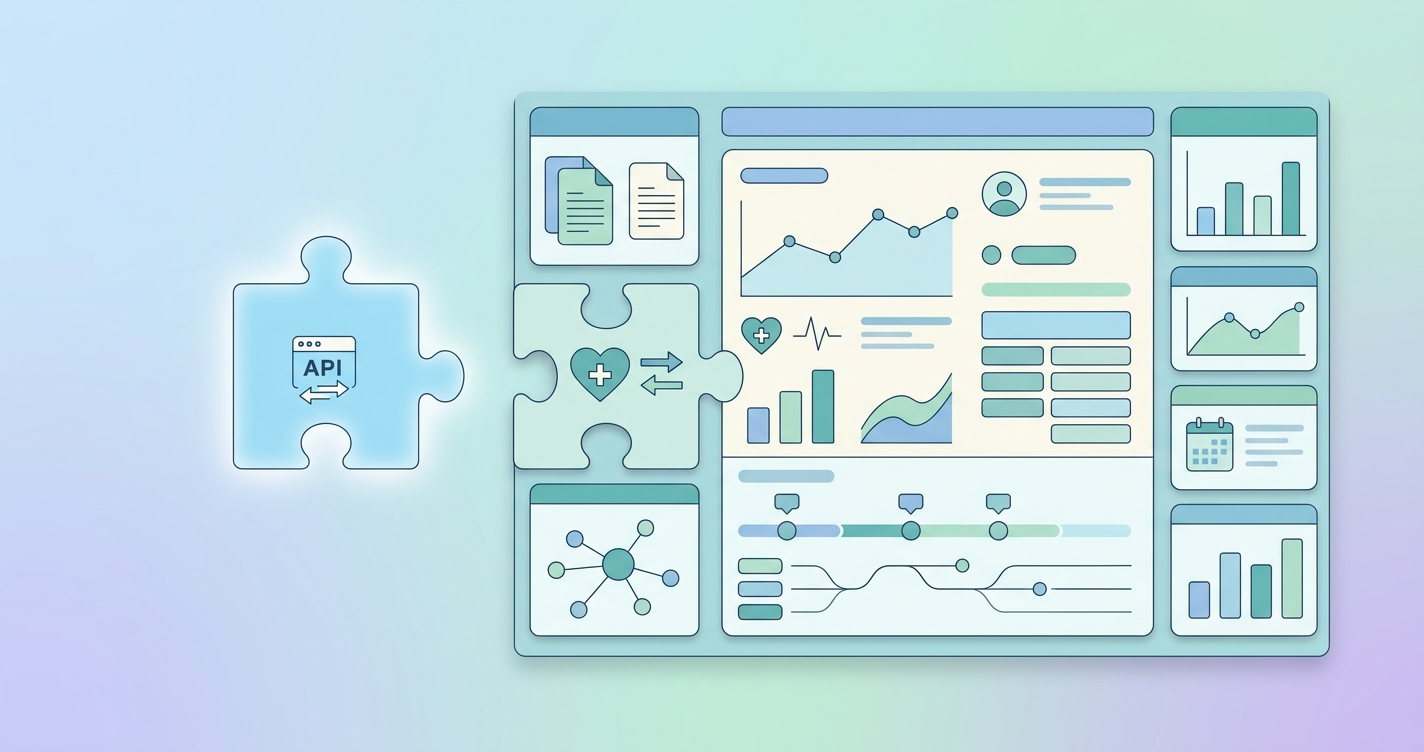
The integration of remote patient monitoring (RPM) data into electronic health records (EHRs) is a critical challenge for health IT teams. The SMART on FHIR framework has emerged as a key standard for addressing this, providing a secure and interoperable pathway for third-party applications to connect with major EHR systems. For telehealth operations and EHR integration specialists, understanding the nuances of a smart on fhir rpm app ehr integration is no longer optional; it is fundamental to building scalable and efficient remote care infrastructure. This report analyzes the technical and strategic implications of using SMART on FHIR for RPM data integration.
"The 21st Century Cures Act mandates that certified EHR systems provide standardized, FHIR-based APIs to improve interoperability. SMART on FHIR is the leading framework for meeting this requirement, enabling a new generation of healthcare applications." - (Mandl, K.D., & Kohane, I.S., 2016, New England Journal of Medicine)
The core problem: RPM data silos and EHR integration
Historically, RPM solutions have operated in silos. Data from remote monitoring devices-, blood pressure cuffs, glucose meters, pulse oximeters-, flowed into proprietary dashboards separate from the core EHR. This created a fragmented workflow for clinicians, requiring them to toggle between systems and manually transcribe data, introducing risks of error and inefficiency. The lack of a standardized integration layer made it difficult for health systems to adopt new RPM technologies or switch vendors without facing significant technical hurdles.
The core value of a smart on fhir rpm app ehr integration is its ability to break down these silos. By combining the data-modeling consistency of HL7 FHIR (Fast Healthcare Interoperability Resources) with the security and authorization protocols of SMART (Substitutable Medical Applications and Reusable Technologies), a standardized "plug-and-play" ecosystem becomes possible. This allows authorized RPM applications to read and write data directly within the EHR, embedding remote vitals and alerts into the existing clinical workflow.
| Integration Approach | Description | Pros | Cons |
|---|---|---|---|
| SMART on FHIR | Uses OAuth 2.0 and OpenID Connect on top of FHIR APIs for secure, standardized app integration. | High interoperability; strong security; scalable; supported by major EHR vendors. | Requires FHIR-ready EHR; can have a steeper initial learning curve for developers new to the standard. |
| Custom API Integration | Direct, point-to-point connection between an RPM platform and an EHR using proprietary APIs. | Can be tailored to very specific workflow needs. | Brittle; high maintenance; not scalable; creates vendor lock-in. |
| Manual Data Entry | Staff manually transcribing data from an RPM dashboard into the EHR. | Low technical barrier to entry. | Highly inefficient; prone to human error; not scalable for large patient populations. |
Key benefits of adopting a SMART on FHIR approach include:
- Streamlined Clinical Workflows: Clinicians can view RPM data, trends, and alerts directly within the patient's chart in the EHR.
- Enhanced Security: uses modern, token-based authentication (OAuth 2.0) to ensure that only authorized applications and users can access patient data.
- Interoperability and Choice: Health systems can more easily adopt best-of-breed RPM applications without being locked into a single vendor's ecosystem.
- Patient Empowerment: Enables patient-facing applications to securely connect to their health records, facilitating greater engagement in their own care.
Industry Applications
Integrating real-time vitals into telehealth visits
A primary use case for a smart on fhir rpm app ehr integration is the enhancement of virtual care. An RPM app can be launched from within a telehealth platform, pulling real-time vital signs from the patient's remote devices and displaying them to the provider during a virtual visit. This data can then be saved back to the EHR as FHIR Observation resources, creating a comprehensive record of the encounter.
Automated alerting and clinical decision support
When RPM data is available as discrete FHIR resources within the EHR, it can be used to trigger automated clinical decision support (CDS) rules. For example, a series of high blood pressure readings can automatically generate a task for a care manager to follow up with the patient, directly within their existing EHR-based work queue.
Population health management
Aggregated RPM data, made accessible via FHIR APIs, can feed into population health analytics platforms. This allows health systems to monitor trends across specific patient cohorts, identify high-risk patients, and measure the effectiveness of remote monitoring programs at scale.
Current research and evidence
The development and adoption of SMART on FHIR have been extensively documented in academic and industry research. Early work by researchers at the Boston Children's Hospital and Harvard Medical School, including Kenneth D. Mandl and Isaac S. Kohane (2016), laid the groundwork for the platform. Their foundational paper in the New England Journal of Medicine described the vision for an "app store for health" built on these open standards. More recent studies have focused on practical implementation. A 2020 study published in JAMIA by developers from the University of California, San Diego, detailed the successful integration of a research-based mobile health app with multiple EHR systems using SMART on FHIR, demonstrating its real-world viability. The Argonaut Project, a private sector initiative, has been instrumental in accelerating the adoption of FHIR and SMART by bringing together major EHR vendors and healthcare organizations to agree on implementation guides.
The Future of SMART on FHIR in RPM
The trajectory for SMART on FHIR is toward deeper and more seamless integration. As EHR vendors continue to expand their FHIR API capabilities, the scope of what RPM apps can do will grow. Future developments will likely focus on more advanced use cases, such as bidirectional data flow where RPM apps Send data to the EHR. Receive and act on orders and care plan updates initiated by the provider. The growth of machine learning and AI in healthcare will also rely on the standardized, accessible data that a smart on fhir rpm app ehr integration provides, enabling more sophisticated predictive analytics and personalized interventions based on continuous remote monitoring data.
Frequently asked questions
What is the difference between FHIR and SMART on FHIR? FHIR (Fast Healthcare Interoperability Resources) is a standard for modeling and exchanging healthcare data. SMART on FHIR is a framework built on top of FHIR that adds a security and authorization layer (using OAuth 2.0 and OpenID Connect) and defines how applications should launch and integrate with EHR systems. Think of FHIR as the language and SMART as the secure "front door" for apps to speak that language with the EHR.
Do all EHRs support SMART on FHIR? All major EHR vendors certified under the 21st Century Cures Act are required to provide FHIR-based APIs. Most have adopted the SMART on FHIR framework as the standard way to enable third-party app integration. This includes vendors like Epic, Cerner, Allscripts, and athenahealth.
Is SMART on FHIR secure? Yes. It uses the OAuth 2.0 protocol, which is the industry standard for secure, token-based authorization used by major technology companies. This allows patients and providers to grant specific, scoped permissions to an application without sharing their EHR username and password.
The shift towards interoperable, data-driven healthcare makes a robust integration strategy essential. Circadify is at the forefront of this space, providing solutions that use open standards like HL7 FHIR to connect remote patient monitoring data with existing clinical systems. To learn more about how to implement a scalable RPM technology stack, explore our integration documentation and EHR guides at circadify.com/solutions/telehealth.