When should I worry about a high reading my home monitor sends my doctor?
From a patient's view, an alert from a home monitor can be alarming. We explain the RPM alerting and escalation workflows that determine if a high reading warrants a callback.
For a patient, receiving a notification that a high reading from your home monitor has been sent to your doctor can be a source of anxiety. The immediate question is, "What happens now? Will I get a call?" This concern is understandable, but the answer isn't about a single number. It's about a sophisticated clinical and technical workflow designed to separate statistical noise from clinically significant events. For health IT and telehealth operations leaders, the challenge isn't just collecting the data; it's architecting the systems that intelligently filter, triage, and escalate these data points so that clinicians are only notified when necessary. A "high reading home monitor alert doctor" event is not a simple trigger but the start of a data-driven operational process.
"A 2022 study on remote patient monitoring for COVID-19 patients found that a clinical decision support system could generate a high volume of useful alerts, but successful implementation required an AI-driven approach to manage and prioritize them, preventing physician overload." - (Andrés et al., Journal of Medical Internet Research, 2022)
Deconstructing the "high reading home monitor alert doctor" signal
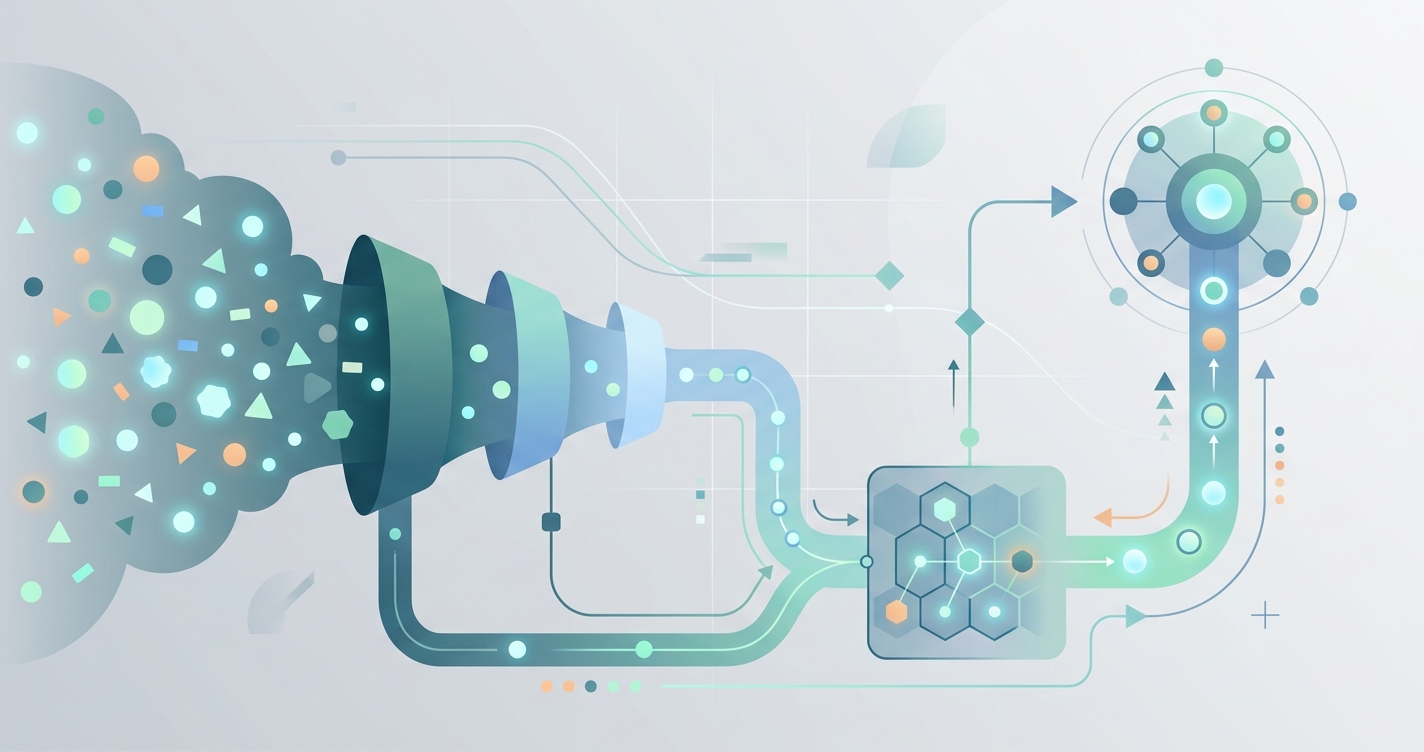
When a home device, such as a blood pressure cuff or pulse oximeter, sends a reading to your provider's system, it doesn't immediately set off a flashing red light on a physician's screen. Instead, it's ingested by a Remote Patient Monitoring (RPM) platform that applies a series of rules and filters. These systems are configured to distinguish between a one-time anomaly, perhaps caused by user error or a temporary stressor, and a pattern that requires clinical attention.
The initial thresholds are often based on established clinical guidelines, such as a resting heart rate above 100 bpm or below 60 bpm. However, the operational maturity of an RPM program is defined by its ability to move beyond these static numbers. Modern systems layer contextual data, such as the patient's own baseline, recent readings, and other clinical information from the EHR, to make a more informed "decision." This initial triage is automated, acting as a crucial first line of defense against alert fatigue, a major operational burden for clinical teams. The goal is to ensure that by the time a human clinician is involved, the signal has been qualified as worthy of their time.
| Alerting Strategy | Clinical Relevance | Risk of False Positives | Implementation Complexity |
|---|---|---|---|
| Static Thresholds | Low | High | Low |
| Patient-Specific Thresholds | Medium | Medium | Medium |
| Trend-Based Alerting | High | Low | High |
This tiered approach ensures that the "high reading home monitor alert doctor" workflow is both efficient and clinically effective, balancing responsiveness with the need to manage clinical resources.
Industry applications in alert workflow management
The true value of an RPM program is realized when its alerting capabilities are deeply integrated into the existing clinical workflow. This is a primary focus for health IT and telehealth operations teams.
Tiered alert response systems
A mature RPM alerting system uses a tiered model. For example:
- Tier 1 (Informational): A slightly elevated reading outside the patient's normal trend. This might trigger an automated message to the patient with instructions to re-measure in 30 minutes, with no clinician notification.
- Tier 2 (Clinical Review): A series of high readings over a 24-hour period. This automatically creates a task for a centralized RPM nursing team to review the patient's data and history.
- Tier 3 (Urgent Escalation): A critically high reading or a rapid negative trend. This triggers a direct alert to the on-call provider or care manager responsible for that patient panel.
Integrating alerts with EHR task lists
The most effective implementations do not require clinicians to live in a separate RPM dashboard. Instead, a qualified Tier 2 or Tier 3 alert is transmitted via an HL7 FHIR-based integration to the provider's EHR, where it appears in their native task list or in-basket. This allows them to manage RPM-generated tasks alongside their other clinical responsibilities, creating a seamless operational flow.
Automating patient communication
For low-acuity alerts, the system can be configured to automatically send a message to the patient's portal or a text message. This communication might ask the patient to verify the reading, provide context ("Did you just exercise?"), or offer educational material. This automated engagement can often resolve the issue without requiring any staff intervention.
Current research and evidence
The architecture of clinical alert systems is a subject of significant academic research. The core challenge is maximizing clinical utility while minimizing the cognitive burden on providers. Researchers David W. Sittig, Adam Wright, and Joan S. Ash have noted that many early clinical decision support (CDS) systems were ineffective because they relied on interruptive "pop-up" style alerts that were not well-integrated into clinical workflows (Sittig, Wright, & Ash, 2016). They argue for a more passive, context-aware system that provides information within the clinician's existing workflow, which is the model modern RPM platforms are adopting.
More recently, a 2022 randomized controlled trial published in the Journal of Medical Internet Research studied a CDS system for remotely monitoring patients. The researchers, led by J. Andrés, found that their system was capable of generating a significant number of alerts that provided valuable information to physicians. Crucially, this was achieved without overloading them, thanks to an AI-driven alert management layer that helped prioritize the signals. This research highlights the operational necessity of not just creating alerts, but intelligently managing their entire lifecycle.
The future of RPM alerting
The next evolution in RPM alert management is centered on predictive analytics and greater automation. Future systems will move beyond reacting to high readings and instead identify patients at risk of developing a problem before it happens. By analyzing subtle changes in vital sign trends, sleep patterns, and activity levels, machine learning algorithms will be able to flag a patient for early intervention days before a critical alert would have been triggered.
This requires a robust data infrastructure capable of processing high-frequency data streams and integrating them with a wide variety of other data sources, from EHR problem lists to claims data. The goal is to create a semi-automated feedback loop where the system can Flag a problem. Suggest a specific action, such as a medication adjustment or a telehealth visit, directly within the provider's workflow.
Frequently asked questions
What's the difference between a red, yellow, and green alert in an RPM system? This color-coding represents the tiered logic of the alert workflow. "Green" typically means the reading is within the expected, healthy range. "Yellow" indicates a cautionary reading that may be slightly outside the patient's baseline and warrants monitoring, but not immediate action. "Red" signifies a critical reading that falls outside of safe parameters and triggers an immediate escalation to a clinical team member for review.
How do clinics prevent 'alert fatigue' for nurses? This is a critical operational challenge. The most effective strategies involve a combination of technology and process. Technologically, this includes using patient-specific (dynamic) thresholds, analyzing trends instead of single readings, and creating automated "snooze" or "suppress" rules for expected variations. Operationally, it involves using a tiered response team, where a dedicated team of RPM nurses handles the initial review of all non-critical alerts, only escalating the most serious issues to physicians or specialists.
Can alert thresholds be customized for each patient? Yes, and this is a hallmark of a modern RPM platform. A "high" blood pressure reading for a healthy 40-year-old is very different from a "high" reading for an 85-year-old with a complex cardiac history. Effective systems allow clinical teams to easily set and adjust individual thresholds based on that patient's specific conditions, care plan goals, and personal baseline data.
The ability to configure, manage, and integrate these complex alerting workflows is fundamental to the success of any modern telehealth or chronic care management program. Circadify is focused on providing health IT teams with the flexible, FHIR-native integration tools needed to build and scale these critical data pipelines. To learn more about how to connect RPM data streams to your existing EHR and telehealth workflows, visit our solutions guide at circadify.com/solutions/telehealth.