Why does my clinic want me to send my health information from my home every morning?
Why clinics ask patients to send health info every morning: the clinical rationale, data trend value, and workflow design behind daily RPM submissions.
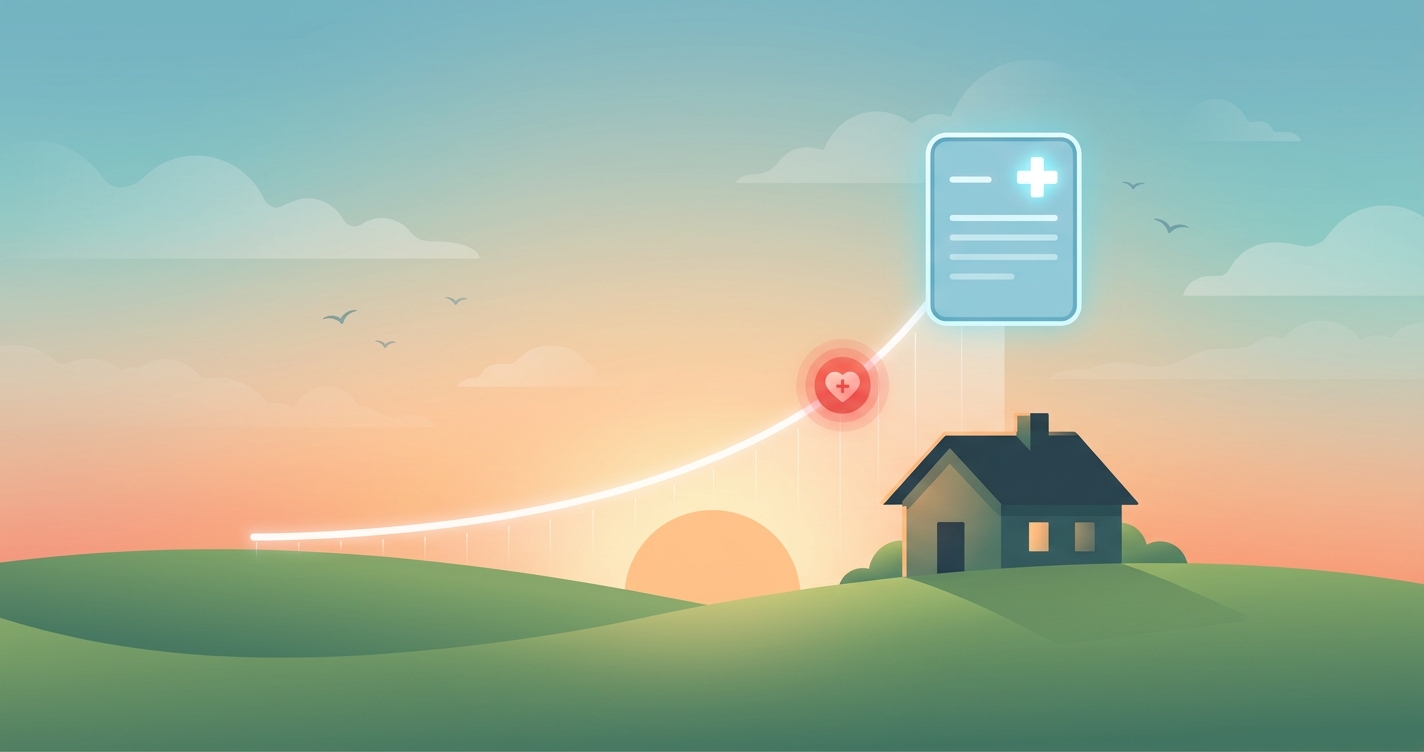
When a care team asks a patient to send health info every morning, the request can feel like surveillance or busywork. From the operational side of a remote patient monitoring (RPM) program, it is neither. A daily measurement taken at a consistent time, transmitted from home into the clinical record, is one of the highest-value data points a chronic care program can collect. For health IT directors and telehealth operations teams, understanding the rationale behind that morning cadence matters because the workflow that supports it (device pairing, transmission, reconciliation, and routing into the EHR) is what determines whether the program produces signal or noise.
A Mass General Brigham remote blood pressure program enrolled more than 10,000 patients, analyzed nearly half a million readings, and used automated daily reports to flag out-of-range values for navigator outreach, producing measurable reductions in blood pressure and cholesterol (Mass General Brigham, 2023).
Why clinics ask patients to send health info every morning
The clinical logic rests on three properties of repeated, time-anchored data: consistency, trend visibility, and early detection. A single reading taken during an office visit is a snapshot influenced by stress, recent activity, and white-coat effect. A morning reading taken in the same chair, before medication and breakfast, under similar conditions day after day, removes much of that variability. That standardization is exactly why morning home blood pressure has been identified as a strong predictor of cardiovascular and stroke risk in hypertension research.
When patients send health info every morning, the clinic is not reacting to any one value. It is building a longitudinal baseline. Deviation from that baseline is what triggers intervention. A blood pressure of 150/95 means little in isolation; the same reading after two weeks of values near 128/80 is a clear, actionable trend. This is the difference between episodic care and continuous care, and it is the operational premise that justifies the data infrastructure investment.
There is also a billing dimension that operations teams track closely. CMS reimbursement for RPM (notably CPT 99454) historically requires device transmission of data on at least 16 days within a 30-day period. A daily morning cadence builds a comfortable margin above that threshold and protects the program against adherence drop-off, which research shows is real: one 2024 emergency-department telemonitoring pilot reported adherence falling from 67 percent at one month to 41 percent at three months among patients completing at least 80 percent of measurements (JMIR, 2024).
| Data collection model | Clinical signal | Workflow burden | Early detection value |
|---|---|---|---|
| Office visit only (episodic) | Single snapshot, high variability | Low, but reactive | Minimal between visits |
| Symptom-triggered patient reporting | Sparse, biased toward bad days | Variable, patient-initiated | Late; deterioration already present |
| Daily morning submission | Standardized, trend-rich | Moderate, requires routing | High; flags drift before crisis |
| Continuous passive monitoring | Dense, high-volume | High; alert fatigue risk | High, but needs strong filtering |
The daily morning model sits at a practical midpoint: enough density to reveal trends, not so much that it overwhelms clinical staff or generates unmanageable alert volume.
What a morning submission actually has to do
For the data to be useful, the act of sending it has to be close to invisible to the patient and clean for the clinic. A well-designed flow includes:
- A consistent capture window (typically morning, pre-medication) to control for diurnal variation
- Automatic device-to-platform transmission rather than manual entry, reducing transcription error
- Timestamp and device-identity metadata so readings can be reconciled and audited
- Mapping into a structured standard such as FHIR Observation resources for clean ingestion into the EHR
- Threshold logic that routes out-of-range values to the right queue without flooding clinicians
When any of these steps breaks, the morning reading either never arrives or arrives in a form a clinician cannot trust. That is why the request to patients is only half the story; the other half is the integration architecture behind it.
Industry Applications
Hypertension and cardiovascular programs
Hypertension is the archetypal use case for daily morning submission because guideline-concordant management depends on home readings averaged over time. Programs structured around a fixed morning measurement give care teams a stable series to titrate medication against, and automated daily flagging lets navigators reach the small subset of patients whose values have drifted, rather than reviewing every reading manually.
Heart failure and post-discharge monitoring
For heart failure, a morning weight combined with symptom check is a low-cost early warning for fluid retention. A two-to-three pound overnight gain, visible only because the patient weighs in at the same time daily, can prompt a medication adjustment that prevents a readmission. The operational requirement here is fast routing: the value loses its preventive worth if it sits unreviewed for days.
Diabetes and multi-condition management
Diabetes programs blend morning glucose with periodic blood pressure and weight, often across multiple devices. This is where data reconciliation pipelines and consistent FHIR mapping become essential, because a multi-vendor device mix multiplies the chance of duplicate, mistimed, or unmapped readings reaching the chart.
Current research and evidence
The evidence base for structured daily submission has matured. The Mass General Brigham remote hypertension and cholesterol program (2023), spanning more than 10,000 enrolled patients and roughly 500,000 blood pressure readings, demonstrated that real-time patient-submitted readings combined with automated daily threshold flagging improved both blood pressure and cholesterol control. The mechanism was not the device; it was the workflow that turned a daily reading into a navigator action.
Adherence research tempers the optimism in a useful way. The 2024 JMIR emergency-department telemonitoring pilot, which asked patients to measure twice daily, documented the steep adherence decay common to home programs. For operations teams, that finding reframes the morning request: a daily cadence is partly a hedge against the inevitable missed days, ensuring enough transmissions accumulate to support both clinical trending and reimbursement thresholds.
Market data reflects the direction of travel. Analysts estimated the global RPM market at roughly 14 billion dollars in 2023, projected to reach 41.7 billion dollars by 2028 at about 20 percent annual growth. Reported outcomes such as substantial readmission reductions in some chronic care programs continue to drive enterprise adoption, though results depend heavily on how cleanly data moves from home to clinician.
The Future of daily health data submission
The trajectory points away from manual, patient-driven entry and toward ambient, low-friction capture that still preserves the morning anchor clinicians rely on. Several shifts are underway:
- Predictive analytics layered on daily trend data, surfacing at-risk patients before threshold breaches rather than after
- Tighter FHIR-native pipelines that drop morning readings directly into the chart as structured Observations, eliminating manual reconciliation
- Smarter alert filtering so that daily density does not translate into clinician alert fatigue
- Contactless and device-light capture methods that lower the patient effort required to submit a consistent morning reading
The constant across all of these is the workflow. Whether a reading comes from a cuff, a scale, or a camera, its clinical value is realized only when it lands in the record, correctly timed and correctly mapped, in time for someone to act.
Frequently asked questions
Why does the timing have to be in the morning specifically? Morning readings, taken before medication and activity, control for the body's daily rhythms and produce a comparable series day to day. Consistent timing is what lets clinicians distinguish a true change in condition from normal daily fluctuation, and morning home blood pressure in particular is a recognized predictor of cardiovascular risk.
Is daily submission really necessary, or is it about billing? Both rationales align. Clinically, daily data builds the trend baseline that makes early detection possible. Operationally, CMS RPM codes require device transmissions on at least 16 of 30 days, and a daily cadence protects the program against natural adherence drop-off so enough readings accumulate.
What happens to the reading after I send it? In a well-integrated program, the reading transmits automatically from the device, is mapped to a structured FHIR Observation, reconciled against the patient record, and routed into the EHR. Out-of-range values are flagged to a clinical queue for review, while in-range values quietly extend the trend line.
Does sending data every day overwhelm the care team? It can, without proper filtering. Mature programs apply threshold and alert-fatigue logic so staff see only readings that deviate from a patient's baseline, while the full daily series remains available for periodic trend review.
For health IT and telehealth operations teams, the morning submission is ultimately an integration question: the clinical value of daily data is only as good as the pipeline that delivers it. Circadify is addressing this space with HL7 FHIR-compatible RPM data designed to plug into existing EHR and telehealth workflows. Review the integration docs and EHR guides at circadify.com/solutions/telehealth to see how daily readings move cleanly from a patient's home into the clinical record.